If you’ve ever walked through a jewellery studio or visited a gemstone showcase, you know that the luster of a well-polished stone can turn a simple piece into something unforgettable. As a jewellery polishing machine supplier, I get questions about this all the time—none more common than: Can you use a jewellery polishing machine on gemstones? It’s a question that sits at the crossroads of craft, science, and practicality, and it’s one that doesn’t have a one-size-fits-all answer. The short version is: Yes, but only if you know your gemstones, your machine, and how to adjust your process to protect both. Let’s dive into what makes this work, where it can go wrong, and how to do it right. Jewellery Polishing Machine

First, let’s clear up a common misconception. A jewellery polishing machine isn’t a single tool—it’s a category. At our company, we supply machines tailored for every step of jewellery making, from rough metal shaping to fine finishing. Some are heavy-duty, designed for sanding thick brass or stainless steel; others are compact, with soft, flexible pads ideal for delicate work. Gemstones, though, are not all created equal. Their hardness, structure, and even internal stress determine how they react to friction, pressure, and the compounds used in polishing. That’s why the key isn’t just “can you” but which type of machine you use, and for which gemstone.
Let’s start with the gemstones that handle polishing machines best. High-hardness stones, like sapphires, rubies, and diamonds, score 9 or 10 on the Mohs scale (a 10-point scale measuring scratch resistance). Their dense, uniform structure means they can stand up to the moderate pressure and controlled abrasion of a polishing machine without chipping or scratching. For these, a bench-top polishing machine with a low-speed rotary head, fitted with a felt buff and a mild diamond compound, works perfectly. We supply many jewelers who use this setup to polish the facets of a sapphire engagement ring, for example. They run the machine at 1,200 to 1,500 RPM, hold the sapphire at a consistent angle, and move it steadily to avoid overheating. Done right, this brings out the deep, glossy luster of the stone without damaging its edges.
Even semi-precious stones like quartz (Mohs 7) and topaz (Mohs 8) can be polished with a machine—if you stick to the right parameters. These are hard enough to resist scratching from a buff pad, but softer than corundum, so you need to adjust your compound to a finer grade. We often recommend a 1-micron aluminum oxide compound for quartz, paired with a suede buff, to avoid leaving micro-scratches. The biggest mistake here is using a compound that’s too coarse or a machine that runs too fast; that can leave a stone looking dull or create tiny surface imperfections that only show up under magnification.
Now, the tricky part: gemstones that shouldn’t go near a standard jewellery polishing machine. Soft stones like opal (Mohs 5.5 to 6), turquoise (Mohs 5 to 6), and malachite (Mohs 3.5 to 4) are far too delicate for most machine polishing. Their low hardness means they can scratch easily, and their porous structure can absorb polishing compounds, leaving permanent stains. Even stones that are moderate on the Mohs scale, like emerald (Mohs 7.5 to 8), can have internal fractures (called “jardin”) that make them vulnerable to heat and pressure from a machine. We had a customer a few years back who tried polishing an emerald with a heavy-duty machine, and the heat caused a small crack to widen, ruining the stone. That’s why we always advise jewelers to test a scrap piece of the same stone first if they’re unsure—even for moderate stones, a small test run can save a lot of money.
Another big factor is heat. Polishing generates friction, which creates heat, and some gemstones are extremely sensitive to temperature changes. Amber (Mohs 2 to 2.5), for example, can warp or crack if exposed to too much heat. Pearls, which aren’t even hard on the Mohs scale (they’re around 2.5 to 4.5), have a nacre layer that can peel away if heated. We’ve seen too many jewelers ruin a perfect pearl strand by putting it in a tumbler (a type of jewellery polishing machine used for small pieces) that runs too long and gets too warm. For these stones, hand polishing with a soft cloth and a mild, water-based polish is the way to go—no machine needed.
If you do want to use a jewellery polishing machine on gemstones, there are a few non-negotiable steps to get it right. First, match your machine to the stone. For hard, solid stones like sapphires, a heavy-duty rotary polisher works; for softer semi-precious stones, a variable-speed machine that lets you dial down to 800 RPM is better. We also supply a line of machines with built-in cooling systems, which is a game-changer for heat-sensitive stones. These systems circulate cool water around the buff pad, keeping the stone temperature low and preventing thermal damage.
Next, use the right polishing compounds and pads. We stock a full range of compounds, from coarse 15-micron diamond paste for shaping facets to ultra-fine 0.5-micron aluminum oxide for finishing. For gemstones, always start with a fine compound—never jump from coarse to fine in a way that skips steps, which can leave deep scratches. Pads matter too: a felt pad is too abrasive for soft stones, but a silk or canvas pad is gentle enough. We also recommend a safety mask and eye protection, since polishing compounds can create fine dust that’s bad to breathe in, especially with hard stones like diamond that produce silica dust.
Then, there’s the technique. When polishing a gemstone, never press down hard—let the machine’s motion do the work. Hold the stone at a consistent angle to the buff pad, and move it in small, circular motions to avoid concentrating friction in one spot. For faceted stones, polish each facet individually, using masking tape to cover the surrounding metal setting if you’re working on a finished piece, so you don’t scratch the metal while polishing the stone. We teach this to all the jewelers who buy our machines for gem work, and it’s the difference between a professional finish and a ruined stone.
Now, why does this matter for you, whether you’re a hobbyist jeweler or a small studio owner? As a jewellery polishing machine supplier, our goal isn’t just to sell a machine—it’s to help you use it safely and effectively. Too many people think a polishing machine is a one-tool-fits-all solution, but the best results come from knowing your materials. For example, a customer of ours who specializes in custom engagement rings recently switched from hand-polishing sapphires to using our variable-speed machine with a cooling system. He told us it cut his polishing time in half, and his stone quality went up because he could control the heat better. That’s the value of the right tool, paired with the right knowledge.
I’ve also seen common myths that need to be busted. Some people think all gemstones are too fragile for machines, but that’s not true—hard, dense stones benefit from the consistency of machine polishing, which gives a more uniform finish than hand work. Others think you can use the same machine for metal and gemstones, but we always advise against that. Metal polishing compounds can leave residue on the pad that transfers to gemstones, causing stains. We sell separate pads for gem work, so you don’t mix the two.
If you’re still unsure whether a jewellery polishing machine is right for your gemstone project, here’s a quick checklist: Check the Mohs hardness of your stone. If it’s 7 or higher, you’re in good shape, as long as you use a fine compound, low speed, and a cooling system. If it’s between 5 and 7, test a small, unnoticeable spot first, and keep the machine running for only a few minutes at a time. If it’s below 5, stick to hand polishing.
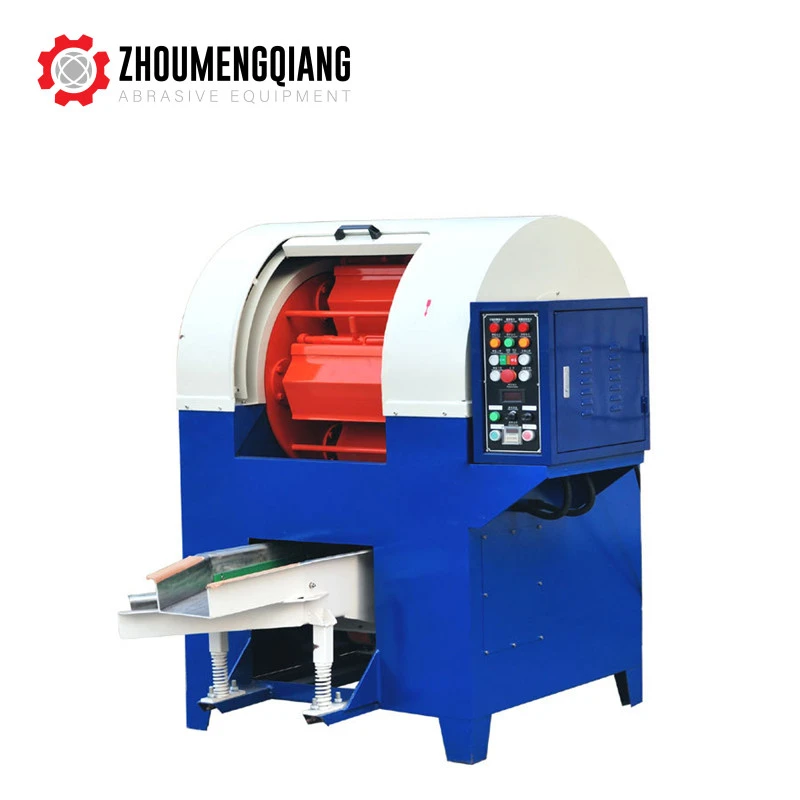
At the end of the day, the question isn’t “can you use a jewellery polishing machine on gemstones”—it’s how to use it properly. As someone who’s worked with jewelers for years, I’ve seen both the magic of a well-polished gemstone and the heartache of a ruined one. That’s why we design our machines to be adaptable, with features that let you adjust to different materials. We also provide training resources, like step-by-step guides for polishing specific gemstones, so you don’t have to figure it out on your own.
Dryer If you’re a jeweler looking to expand your capabilities with gemstone polishing, or a hobbyist who’s tired of hand-finishing giving inconsistent results, don’t guess. Reach out to our team to discuss your needs. We can help you pick the right machine, advise on the best compounds and pads for your gemstones, and answer any questions you have to make sure your projects turn out exactly as you envision. Whether you’re working with sapphires for a high-end collection or semi-precious stones for everyday pieces, we’re here to make sure you have the tools and knowledge to do it right.
References
- Nassau, K. (1980). The Physics and Chemistry of Color: The Fifteenth Excitonic State. John Wiley & Sons.
- Loretto, M. H. (1994). Gemstones: Their Structure and Properties. Chapman & Hall.
- ASM International. (2000). Polishing for Materials Characterization. ASM Handbook, Volume 9: Metallography and Microstructures.
- Shigley, J. E., & Mandle, R. J. (2010). Gemological Science International. Pearson Prentice Hall.
- Cammann, K. (2005). Polishing Techniques for Jewelers and Gem Setters. Gemological Institute of America.
KS Lab Finishing Co., Ltd.
As one of the most professional jewellery polishing machine manufacturers in China, we also support customized service. We warmly welcome you to wholesale durable jewellery polishing machine made in China here from our factory. If you have any enquiry about pricelist, please feel free to email us.
Address: No.11-14, Yantian Shuibei Commercial Street, Fenggang Town,Dongguan,China
E-mail: sales@kslabfinishing.com
WebSite: https://www.kslabfinishing.net/
