Hey everyone, and welcome to another deep dive into the stuff that keeps industrial machinery from falling apart — because let’s be real, no one wants a conveyor belt or packaging line crashing mid-shift. Today, we’re answering a question we get every single week from mechanics, plant managers, and even hobbyists working on heavy equipment: “Do Hex Jam Nuts lock in place?” Hex Jam Nuts

As a Hex Jam Nuts supplier, I see this question come up in all shapes: sometimes it’s from a guy who’s tried regular hex nuts on a vibrating assembly and watched them walk off in three days. Other times, it’s an engineer who swapped to jam nuts expecting a fix, only to find they’re still backing off. Let’s cut through the myth here, because this isn’t a yes-or-no answer — it’s a how, when, and why that matters way more than most people think.
First, let’s break down what makes a hex jam nut different from a standard hex nut. A standard hex nut is just a hex-shaped fastener with internal threads, right? You turn it onto a bolt, it clamps down on whatever’s between the bolt head and the nut face. A hex jam nut — sometimes called a “jam nut” or “lock nut” in casual talk — is thinner, about half the height of a standard hex nut (that’s the “jam” part, by the way: you “jam” two nuts together to lock them). Wait, no, hold on — some people mix this up with the old two-nut trick, but a lot of folks reach for jam nuts as a single component to do that job. Let’s clarify that: a single hex jam nut on its own doesn’t lock — not in the way people expect. Let’s test this with the science behind it.
The whole reason nuts back off is vibration-induced loosening. When machinery vibrates, the bolt threads stretch a tiny bit, and friction between the nut and the mating surface wears down over time (or the bolt’s own stretch relaxes). That gap, even a fraction of a millimeter, lets the nut spin backwards. Standard hex nuts rely on friction from the clamp load you put on the bolt when you tighten them — but that friction drops fast with consistent vibration.
A hex jam nut’s design is built for clamping, not single-part locking. Here’s how the old-school two-nut method works, and why it’s tied to jam nuts: you thread a standard nut onto the bolt first, tighten it to the required torque, then thread the thinner jam nut on top, tighten it against the standard nut. Now you’ve got two nuts, and the force between them (the “jam”) creates interference on the bolt threads. That interference means the threads can’t slip past each other — so neither nut can spin, even with vibration. But if you’re only using a single jam nut? That force doesn’t exist. You’re just running a thinner nut, so the clamp load you can put on it is lower, and the threads have less friction to fight vibration. So a single hex jam nut will back off, especially on high-vibration applications like mining equipment, farm machinery, or conveyor systems. That’s the mistake so many people make: they grab a jam nut thinking it’s a one-stop lock, and it doesn’t work because they’re not using it right.
But wait — that’s not to say jam nuts are useless. They have super specific jobs. Let’s talk about when they do lock in place, and when they don’t. First, the times a single hex jam nut does hold: low-vibration, low-load applications. Like, say, a shelf bracket in your garage, or a decorative railing on a porch. No constant shaking, no heavy pull on the fastener — just occasional light movement. In those cases, the lower height of the jam nut doesn’t matter, because you’re not fighting the forces that make nuts back off. Tighten it properly to the bolt’s specified torque, and it’ll stay put. But the second you’re dealing with anything that vibrates — a truck’s wheel well hardware, a factory’s packaging machine arms, a lawnmower’s blade assembly — a single jam nut will fail. I’ve had a customer come to us last month whose farm hay baler nuts kept backing off twice a week, even after they tried cheap standard nuts. They swapped to hex jam nuts, same thing. Turns out, they were only using one jam nut each time, instead of the two-nut method. We supplied them with the right size jam nuts plus a little guidance, and they haven’t had a failure since in six months. That’s the key: jam nuts aren’t lock nuts — they’re a component used in a locking assembly.
Another big point: material and finish matter, too. If your hex jam nut is made of soft steel, it’ll deform under pressure, so the thread interference doesn’t hold. If it’s a zinc-plated nut, that coating can flake off over time, reducing friction. We supply hex jam nuts in carbon steel (for general use), stainless steel (for corrosive environments like food processing plants or outdoor equipment), and even zinc-plated carbon steel for extra rust resistance. For high-vibration applications, we recommend 304 stainless steel jam nuts — they’re durable, hold their shape, and the thread engagement is consistent, so when you pair two of them, the interference stays strong. We also offer nylon insert jam nuts, wait — hold on, is that a thing? Yeah, some suppliers call nylon insert nuts “jam nuts,” but that’s a misnomer. Nylon insert nuts have a plastic ring inside that creates thread lock, but that’s a separate design, not a traditional hex jam nut. Don’t mix those up: if you want the classic jam nut locking method, stick to the thinner, standard thread pitch hex jam nuts, not the nylon ones. The nylon ones work, but they’re better for lower-vibration stuff like furniture, not industrial machinery.
Let’s bust a common myth here: some people say “jam nuts lock because they’re thinner, so the thread pitch is tighter.” No, that’s not how it works. Thread pitch is fixed for a given bolt size — a 3/8”-16 bolt has 16 threads per inch, no matter if you use a standard or jam nut. The thickness only changes the amount of clamp load you can apply. A standard hex nut can handle more torque, so it creates more friction on the threads. A jam nut, being thinner, can snap if you torque it too hard — that’s another mistake people make: they crank a jam nut the same as a standard nut, and it breaks, leaving a bolt stuck in equipment. So when you use two jam nuts (one standard, one thin jam, or two thin jam nuts, but we usually recommend one standard and one jam for better load distribution), you torque the first standard nut to the required torque, then tighten the jam nut against it with about 30% of that torque. That creates the interference between the two nuts’ threads, which stops them from spinning, and you avoid breaking the thinner jam nut.
Now, let’s talk about when you should not use hex jam nuts. If you’re dealing with extreme vibration, like a car’s engine mounts, or heavy shock loads like a crane’s lifting arm, jam nuts (even two) won’t hold. For those, you need actual lock nuts: nylon insert, prevailing torque nuts, or even lock washers (though lock washers have their own issues, like damaging the surface they clamp on). But for mid-vibration, moderate load applications — conveyor belts, agricultural equipment, construction tools — hex jam nuts paired in the two-nut method are still the go-to for many teams, because they’re cheaper than specialized lock nuts, and they’re easy to replace when you do need maintenance.
As a Hex Jam Nuts supplier, I’ve seen both sides: customers who buy the wrong nut and end up with downtime, and customers who use them correctly and save hundreds in repair costs. Last year, a small food processing plant was having issues with their conveyor drive assembly — nuts were backing off every two weeks, which shut down their line during a shift. They tried standard nuts, lock washers, even nylon insert nuts, all with the same problem. We suggested they switch to two hex jam nuts (a standard carbon steel and a thinner jam nut) for each bolt, and adjust their torque specs. Since then, they haven’t had a single nut failure. They told us it cut their maintenance time on that line by 75% — that’s a win for everyone.
Wait, let’s circle back to the original question again: “Do Hex Jam Nuts lock in place?” The short answer is: not on their own, but when used correctly (paired in a two-nut assembly, for the right application, with the right material), they absolutely do. A lot of suppliers will say “yes, jam nuts lock,” but that’s misleading because most people don’t know you need two. We make it a point to tell every customer that buys hex jam nuts from us: if you’re using them on vibrating equipment, pair them with a standard nut. If it’s low-vibration, single is fine, but double-check your torque. No fine print, no hidden catch — just straight talk, because we don’t want our customers dealing with the same headaches we know come from wrong fastener choices.
Let’s also address a few other common issues people run into with hex jam nuts: cross-threading. If you don’t line the jam nut up straight when you thread it onto the bolt, you’ll wear the threads, which makes locking impossible. And if you’re working with metric bolts, make sure your hex jam nuts are metric — that sounds obvious, but we get calls from guys who bought SAE jam nuts for their metric bolts, and they’re too loose, so they back off immediately. We stock both metric and SAE hex jam nuts, so that’s one less thing you have to guess about.
Another thing: corrosion. If your equipment is outdoors, or in a wet environment, standard carbon steel hex jam nuts will rust, which can make them bind, so they don’t tighten properly. Stainless steel jam nuts are the fix there, and we supply 304 and 316 stainless options for different levels of corrosion. A lot of customers skip this and end up with jam nuts that won’t turn after a month, which is just as bad as nut back-off.
So to wrap this up: if you’re wondering whether hex jam nuts will lock in place, it’s all about context. Single nut on low-vibration, static applications? They’ll hold, no problem. Single nut on vibrating industrial or agricultural equipment? They’ll back off, guaranteed. Two nuts (one standard, one jam) on that same vibrating equipment? They lock in place, stand up to daily use, and save you money on replacement parts.
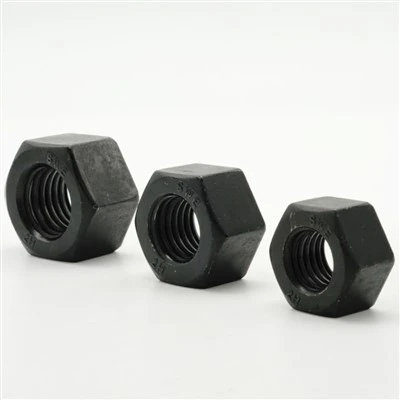
Now, if you’re dealing with a specific application — whether that’s conveyor systems, farm machinery, packaging lines, or anything else — we’re here to help. No pushy sales talk, no complicated jargon, just guidance on which hex jam nut (or other fastener) will work best for your needs. Reach out to our team to discuss your requirements, and we’ll make sure you get the right products to keep your equipment running smoothly.
Nylon Insert Hex Nuts References:
- Shigley, J. E., Mischke, C. R., & Budynas, R. G. (2003). Mechanical Engineering Design. McGraw-Hill.
- Bickford, J. H. (1990). An Introduction to the Design and Behavior of Bolted Joints. CRC Press.
- VDI 2230: Systematic Calculation of Bolted Joints with Steady and Alternating Loads. Association of German Engineers, 2014.
- Fastener Engineering and Manufacturing Association (FEMA). (2021). Locking Fasteners: Selection and Application Guidelines. FEMA Publications.
Shanghai Welfast Enterprise Co., Ltd.
As one of the most experienced hex jam nuts manufacturers and suppliers in China, our products have good reputation in the market. Please rest assured to buy bulk premium hex jam nuts for sale here from our factory. Good service and quality products are available.
Address: 6C, No.201, Ningxia Road, Putuo District, Shanghai, China.
E-mail: sales@welfast.com
WebSite: https://www.welfast.com/
