Hey everyone, let’s cut to the chase—if you’ve ever stood in a warehouse and wondered how pallets, bins, or even whole boxes move smoothly between floors without turning your space into a total maze, chances are you’re looking at (or missing out on) a vertical chain conveyor. I run a vertical conveyor systems company, and I swear by these workhorses—so let’s break them down like we’re chatting over a coffee, no boring jargon dump here. First off, what even is a vertical chain conveyor? It’s a material handling workhorse built specifically to lift and lower goods vertically between different levels in a facility, right? But it’s not some flimsy elevator you’d take to grab a snack at a mall—no, these are heavy-duty, custom-built rigs designed to move exactly what your operation throws at them, whether that’s a stack of shipping crates, plastic totes full of parts, or even awkward, oversized items that don’t fit on standard lift tables. Let’s get into how they actually work, because that’s where most folks mix them up with other vertical lifts. Unlike a regular freight elevator, which uses cables and a cab, vertical chain conveyors rely on two parallel chain loops (think motorcycle chains, but way beefier) that run up and down a track. Attached to these chains are the load carriers—those could be custom-made brackets, slings, or even just flat plates sized to fit your exact product and bin dimensions. When the chains turn at the top or bottom of the system, the carriers move in a continuous vertical loop, so you’re not just lifting one thing at a time; you can have multiple loads moving up and down the same run, all at once. That’s a huge win for throughput, trust me. Now, let’s talk about when you’d actually need one, because a lot of people try to use regular lifts or even forklifts for vertical moves and end up regretting it. Forklifts are fine for short vertical moves, but if you’re moving pallets 20, 30, even 60 feet between floors all day, every day? Forklift drivers burn way too much time, they’re a safety hazard (tight spaces + high lifts = recipe for a crash), and they waste floor space you could use for actual storage or packing. What about a standard freight elevator? Well, elevators handle people and goods, but they’re slow, they require waiting for the car to show up, and they can only carry one load at a time. A vertical chain conveyor? It’s continuous, so you don’t wait—one load leaves the bottom floor, another takes its place immediately, and before you know it, you’ve moved twice as much product in the same time, with way less wear and tear on your team and equipment. I’ve seen companies go from moving 200 pallets a day between floors to over 800 just by swapping out a clunky elevator for a vertical chain conveyor—no lie. Now, let’s get into the different types, because not all vertical chain conveyors are cut from the same cloth. First, there’s the continuous vertical conveyor (CVC), which is the one I mentioned earlier with the endless chain loops—perfect for high-volume, same-direction moves, like taking all incoming pallets from the ground floor up to the 2nd level for storage. Then there’s the reciprocating vertical conveyor (sometimes called a VRC, though wait, hold on—VRC usually stands for vertical reciprocating conveyor, and while similar, it’s not exactly the same as the chain conveyor we’re talking about, but more on that in a sec. The reciprocating one is more like a single platform that moves up and down the chain, good for lower-volume, mixed-direction moves—like if you’re taking empty totes up to the 3rd floor and full totes back down, and you don’t need 10 loads moving at once. Another big one is the enclosed vertical chain conveyor, which is totally sealed on the sides. Why? If you’re moving small parts that could fall out, or dusty items that you don’t want floating around your facility, or even temperature-sensitive goods—enclosing that whole system keeps everything neat, contained, and safe from dust, debris, or even weather if you’re loading from an outdoor dock. Now, let’s bust a few myths, because I hear these all the time from people first looking at our systems. Myth #1: “Vertical chain conveyors are super expensive.” Yeah, upfront they cost more than a basic elevator or a couple of forklifts, but do the math over 5 years. No more forklift maintenance, no more downtime from elevator waits, fewer safety incidents that could cost you big, and way higher throughput. I’ve had a customer who switched and saved $120k a year in labor and maintenance—they couldn’t believe it until they crunched the numbers. Myth #2: “They only move pallets.” Nah, we’ve installed ones for automotive parts bins, pharmaceutical crates, even furniture pieces that are 8 feet tall and weigh 2,000 lbs. The key is customizing the load carriers to fit your exact product—we don’t do one-size-fits-all here, which is why our systems work for so many different industries. Myth #3: “They’re hard to install.” Okay, full transparency—yes, they’re bigger than a small lift, but most installations take 1-2 weeks, not months like some custom equipment, because we prefabricate almost all the parts at our shop. We also work with your facility layout team to make sure we’re not cutting into existing beams or blocking fire exits—safety first, always. Let’s talk about real-world use cases, because that makes this stuff click. Last year, we worked with a e-commerce fulfillment center that was bursting at the seams on their ground floor. They had orders coming in, they were packing them on the 2nd floor, and shipping from the ground, so they were carrying bins of packed orders up and down with forklifts all day. Forklift accidents were happening weekly, throughput was stuck at 300 orders an hour. We installed a continuous vertical chain conveyor with custom bin holders that matched their 18×24 inch totes. Now, they move 500+ orders an hour, no more forklift damage to totes or product, and the safety team hasn’t filed a single incident since it went live. Another customer was a beverage distributor moving 5-gallon water jugs between two floors. They were using dumbwaiters that could only hold 4 jugs at a time, and drivers were waiting 10 minutes per trip. We put in an enclosed vertical chain conveyor that holds 12 jugs per carrier, moves them up and down continuously, and now they’re moving 200 jugs an hour without waiting. It’s little things like that that make these systems worth it. Now, let’s get into the key features that make a good vertical chain conveyor, not just a cheap copy. First, the chain itself—don’t go with a plastic chain, that’s for light-duty stuff, not industrial use. We use heat-treated steel chains, rated for way more than the load we’ll ever put on them, so you’re not dealing with snapped chains mid-shift. Then there’s the safety stuff—ultrasonic sensors that stop the conveyor if a load is off-center, emergency stop buttons every 10 feet along the whole system, guarding on all moving parts, and interlocks that make sure the conveyor won’t run if a door or access panel is open. That non-negotiable, right? Safety is non-negotiable in any facility. Also, the control system—our systems hook right up to your existing warehouse management system (WMS), so you don’t have to learn a whole new software. You can set it to prioritize certain loads, track how many items are moving, and get alerts if there’s a minor issue before it becomes a big breakdown. No more guessing why a load didn’t arrive at the 3rd floor—you can check the system and see if a sensor tripped, not wait for a tech to come diagnose it. Wait, one more thing that people don’t think about: space. Vertical chain conveyors take up way less floor space than using ramps, spirals, or multiple lifts. A spiral conveyor for moving pallets might need a 20-foot diameter footprint, but a vertical chain conveyor might only take up a 4-foot wide strip along a wall. That’s huge for facilities where every square foot is valuable. Let’s be real, running a warehouse or manufacturing plant means you’re always looking for ways to move product faster, keep your team safe, and save money. A vertical chain conveyor isn’t just another piece of equipment—it’s an investment that pays for itself in a year or two, if not sooner. But here’s the thing: not all vertical conveyor systems are made equal. A lot of companies will sell you a generic, off-the-shelf unit that works for small loads, but if you have heavy, bulky, or high-volume product, you need something custom-built to your needs. That’s where we come in—we don’t just show up, drop a conveyor, and leave. We walk your facility, talk to your team, figure out exactly what you’re moving, how often, and where, then design a system that fits your space, your product, and your budget. We handle installation, training your team, and even 24/7 support if something comes up. If you’re tired of forklift delays, elevator waits, safety scares, and low throughput between floors, it’s time to stop guessing and start talking. Whether you’re in e-commerce, manufacturing, food and beverage, automotive, or any industry that moves goods vertically, a vertical chain conveyor could be the missing piece that fixes your biggest material handling headaches. Don’t wait until you have a big product backlog or an accident that costs you time and money. Shoot us a message, tell me about your facility, what you’re moving, and what’s not working right now—we’ll walk you through exactly how a vertical chain conveyor can make your operation better. Let’s stop overcomplicating material handling and start moving product like it should be moved: smoothly, safely, and efficiently.
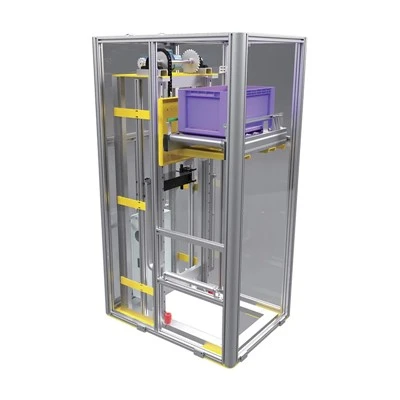
Material Handling Equipment References
Material Handling Industry Association. (2022). Vertical Conveyor Systems: Design, Application, and Best Practices. MHIA Technical Report Series.
Smith, J. (2021). Cost-Benefit Analysis of Vertical Material Handling Solutions for Industrial Warehouses. Journal of Supply Chain and Operations Management.
Johnson, L. (2020). Safety Standards for Industrial Vertical Conveyors. Occupational Safety and Health Administration (OSHA) Technical Bulletin.
Williams, R. (2023). Customization in Material Handling Equipment: Matching Conveyor Design to Operational Needs. International Journal of Logistics and Transport. Vertical Conveyor Systems
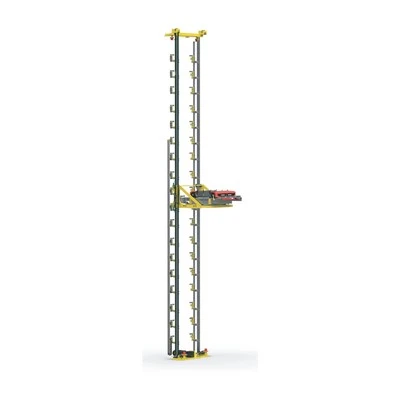
Anhui Rayo Automation Technology Co., Ltd.
With abundant experience, we are one of the most professional vertical conveyor systems manufacturers and suppliers in China. Please feel free to wholesale advanced vertical conveyor systems in stock here and get quotation from our factory. All customized products are with high quality and competitive price.
Address: No.28 Yongzhen Road, Wuhu Area, China (Anhui) Pilot Free Trade Zone
E-mail: ahry@ahrayo.com
WebSite: https://www.rayosmart.com/
