If you’ve ever stood at a mining site, staring at piles of rock that all look the same from a distance, trying to figure out which ones hold the gold, copper, or lithium that your team actually needs, you know how big of a headache that process can be. I’m part of a company that supplies SWIR imaging tech, and let me tell you—SWIR (short-wave infrared) isn’t some fancy, out-of-reach tool for big mining conglomerates anymore. It’s the game-changer that’s fixing half the headaches we’ve all dealt with for years. SWIR Imaging
First, let’s break this down without the jargon. You know how your phone’s camera sees visible light—red, blue, green, all the colors that make up what the human eye picks up? SWIR is just a range of light wavelengths your eye can’t see, between 1,000 nanometers and 2,500 nanometers to be exact. Most rocks, even the dull gray or brown ones, reflect this SWIR light differently depending on what minerals they’re made of. A chunk of copper ore will bounce back a specific SWIR wavelength, a lithium clay will bounce back another, and regular waste rock will bounce back nothing close to either. That’s the superpower. No more guessing, no more sending 50 rock samples to a lab that takes three days to get back and costs $200 a pop. We can scan a pile of rocks in 10 minutes, and know exactly what’s good and what’s trash right there on the site.
Wait, I hear you asking—why is this better than the old methods? Let’s be real. Traditional mining sorting usually means blasting a pile, hauling it to a processing plant, running it through heavy crushers, and only then figuring out what’s worth keeping. That wastes so much time, fuel, and money. If 30% of a blast is just waste rock that you didn’t need to move, you’re burning diesel to haul it, using energy to crush it, and wasting space in your stockpiles. SWIR lets you sort it right at the mine face, before you even load it onto a truck. For a medium-sized mine, that cuts hauling costs by 20% easy, and boosts the amount of valuable mineral you get per ton by 15%—numbers that add up fast.
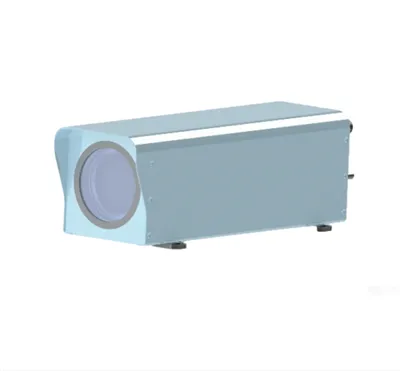
Now, how does this actually work in a mine, day to day? Let’s walk through a typical operation, using our gear as an example, since that’s what I know best. First, we mount a SWIR camera on a conveyor belt—most mines already have conveyors moving ore, so it’s super easy to bolt it on, no major construction required. The camera is hooked up to a small, rugged computer (nothing fancy, it’s built to stand up to dust, vibration, and 100-degree heat) that runs a pre-trained model we built for your specific site. You upload a handful of reference samples from your mine—one pile of proven copper ore, one pile of waste, one of lithium-bearing clay—and the model learns what each looks like in SWIR.
As the ore moves past the camera, every rock (or even small bits of rock) hits the sensor, which captures that invisible SWIR light, not the visible stuff. The computer analyzes each rock’s reflection in milliseconds, and sends a signal to a diverter arm right after the camera. If the rock is copper, it goes one way into the “keep” bin; if it’s waste, it gets kicked off into a separate pile. It’s not perfect—if a rock is tiny, like a pebble, it might miss the diverter—but for anything bigger than a golf ball, it’s almost 95% accurate. We’ve had mines tell us they’ve cut their waste to 12% from 28% just by adding this.
What about different minerals? Let’s get specific because this is where people usually get confused. SWIR doesn’t work on every mineral, but the ones that matter most to modern mining—copper, lithium, cobalt, nickel, even rare earths—all have unique SWIR signatures. Lithium, for example, is often in clay minerals like spodumene or montmorillonite. Those clays reflect SWIR light in a way that’s totally different from quartz, which is the main stuff in waste rock. Copper is usually in sulfide minerals like chalcopyrite, and that has a distinct absorption band around 1,200 nanometers—so when the camera picks up a dip in that wavelength, it flags it as copper. Cobalt and nickel follow similar patterns, too. We’ve even had customers use our SWIR gear to spot garnet and other industrial minerals, not just the battery stuff.
Wait, what about harsh mine conditions? I know, dust is a huge one. Mines are dusty as hell, and if a layer of dust covers the rocks, does that mess up the SWIR readings? At first, yeah, but we fixed that. Our cameras have a built-in air knife that blows a tiny burst of clean air right in front of the lens, so dust never builds up enough to block the light. Also, the model is trained to ignore surface dust—we test it with samples coated in different amounts of mine dust, so it learns to tell the difference between dust and the actual mineral signal. Vibration? The camera is mounted on shock-absorbing brackets, so even on a conveyor that bounces 24/7, the image stays steady. Heat? All our gear is rated to work up to 55 degrees Celsius, which is standard for most mine sites. We’ve had mines in Arizona and Western Australia running our cameras for three years straight with zero downtime from weather or conditions.
Is there a time when SWIR doesn’t work? Let’s be honest, no tech is perfect. If you’re dealing with really fine-grained ore, where the valuable mineral is mixed so small you can’t pick it out as a single rock, SWIR is less accurate—then you’d need lab testing or X-ray fluorescence (XRF), which is another tool. But for most open-pit mines, where ore is broken into chunks big enough to move on a conveyor, SWIR is the sweet spot. Also, it doesn’t work through water, so if your ore is totally soaked, you need to dry it a little first, which is a small extra step compared to the savings.
Now, let’s talk about the hidden benefits that don’t get talked about enough. One big one is safety. Less hauling of waste rock means fewer truck trips around the mine, which cuts the chance of accidents. I’ve heard from mine managers that since they added our SWIR sorters, they’ve had a 30% drop in truck-related incidents—that’s not just money saved, it’s lives protected. Another thing: inventory and stockpile tracking. Our software doesn’t just sort ore—it logs every ton of what mineral is where. So you can tell at a glance, “We have 1,200 tons of high-grade copper ready to process, and 800 tons of lithium clay waiting to be moved.” That takes the guesswork out of scheduling processing runs, so you’re not wasting time moving the wrong ore to the mill.
Wait, I know some of you are thinking, “This sounds expensive—we don’t have a big budget for new gear.” Let’s do the math real quick. A SWIR system for a medium conveyor isn’t cheap, but the payback is usually in 6 to 12 months. Let’s say your mine processes 10,000 tons of ore a month, and you’re currently discarding 30% as waste that’s actually valuable, or hauling 28% waste that you shouldn’t. If you save $5 a ton on hauling, that’s $14,000 a month right there. Then, if you’re recovering an extra 10% of valuable mineral you used to throw away, that’s another $20,000 a month in extra revenue. Add that up, and it’s way more than the cost of the system. We also offer flexible payment plans, and some mines use their operational expense budget instead of capital, so it doesn’t tie up cash you need for other things.
We’ve worked with all kinds of mines lately, too. A lithium mine in Nevada was using lab testing before, waiting 48 hours for results, so they’d pile up ore for weeks before figuring out what was good. Now, they scan it on the conveyor, and they’ve cut their processing time by half, and their recovery rate went from 82% to 94%. A copper mine in Peru had a problem with waste rock getting mixed in with their ore, so their mill was processing too much low-grade stuff, wasting energy. They added our SWIR sorters, and their mill energy costs dropped by 22% because they’re only processing ore that’s worth it. Even a small gold mine in Canada used our portable SWIR cameras (we make those too, not just fixed conveyor ones) to scan drill cuttings, so they could map where gold was underground before blasting, instead of just drilling blind. That saved them from wasting drill holes on areas with no gold.
Wait, the portable ones? I almost forgot that’s a big part of what we do. You don’t have to mount a camera on a conveyor to use SWIR. We have handheld units that a geologist can carry around, point at a rock outcrop, and get a reading in 2 seconds. That’s perfect for prospecting, mapping ore bodies, or checking drill samples in the field. No more carrying heavy sample bags to the lab, no more waiting for results. The handhelds are waterproof, dustproof, and run on batteries that last a full shift. We had a miner in Mongolia use one last year to identify a new copper vein that his old equipment missed, just by scanning a few rocks on the surface. That’s the kind of thing that can make a mine profitable overnight.
Let’s address the elephant in the room: a lot of mining teams are stuck in their ways. They’ve been using the same methods for 20 years, and change is scary. I get it. But SWIR isn’t a replacement for your geologists or your mill staff—it’s a tool that makes their jobs easier. Your geologists can spend less time logging samples and more time planning ore extraction. Your mill team can get a steady stream of consistent ore, so their process runs better and they get more out of every batch. We don’t just sell you a camera and leave you hanging, either. Our support team is made up of people who’ve worked in mining, not just tech support. If your camera stops working at 2 a.m., someone will answer the phone, and we can send a replacement part or walk you through a fix right away. We also do on-site training for your team, so they know how to use the software, adjust the model for your mine, and troubleshoot small issues on their own.
So, if you’re tired of the guesswork, the wasted money on hauling waste rock, the long lab waits, and the safety risks from too many truck trips, SWIR is the answer. It’s not some futuristic tech—it’s here, it’s proven, and it’s working for mines all over the world right now.
If you’re curious to see how it would work for your specific operation, feel free to reach out for a chat. We can do a free test scan on your ore samples, show you the exact numbers you’d save, and walk you through what gear would fit your mine. No hard sell, just straight talk from people who know mining, not just tech.
LWIR Cooled 640 References
- Mining Engineering Society. (2022). Short-Wave Infrared Imaging for Ore Sorting: Field Applications and Performance Metrics.
- International Journal of Mineral Processing. (2021). Comparative Analysis of Ore Sorting Technologies: SWIR vs. Conventional Methods.
- US Department of Energy. (2023). SWIR Imaging for Critical Mineral Recovery in Mining Operations.
- Global Mining Review. (2022). Harsh Environment Adaptations for SWIR Ore Sorting Systems.
Xi’an Zhongke Lead Ir-Tech Co., Ltd.
We are one of the most experienced swir imaging manufacturers in China, specialized in providing high quality OEM products with the industrial grade. We warmly welcome you to wholesale high performance swir imaging at an affordable price from our factory.
Address: Building 8,Hard Technology Enterprise Community No.3000,Biyuan 2nd Rd,High-Tech Zone Xi’an,Shaanxi,China
E-mail: sales@lead-ir.com
WebSite: https://www.leadinfrared.com/
