Alright, let’s cut to the chase – if you’re running or working with EPP shape molding machines, overheating isn’t just a minor hiccup; it’s the #1 silent killer that’s gonna mess up your part quality, blow out tooling, and eat into your profits faster than you can reload a mold. I’ve been deep in this game as an EPP molding machine supplier for 12 years now, and I’ve seen every overheating disaster you can think of: a client’s whole production line grinding to a halt at 2 a.m. because their water chiller died, parts coming out warped with those weird burn marks, and even a set of aluminum mold plates that warped so bad they had to trash a $8k tool. Today I’m walking you through the real, actionable stuff – no jargon, no generic tips, just stuff that actually works because it’s what I’ve seen save my clients’ bacon a hundred times over. EPP Shape Molding Machine
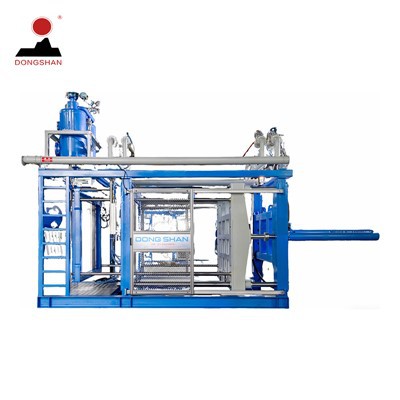
First, let’s get one thing straight: EPP (expanded polypropylene) is a low-density, closed-cell foam that needs super specific heat to expand correctly. Overheating happens when the machine’s core temps, mold temps, or hydraulic system temps climb too high, and every component of the machine feeds into that. It’s not just one part failing – it’s a chain reaction if you don’t catch it early. Let’s break down the fixes by where overheating usually starts, starting with the most common culprit: the temperature control system on the molding machine itself.
I know, I know – you probably already have a water chiller hooked up to your machine’s mold and core lines, but here’s the mistake 90% of new clients make: they set it and forget it. EPP molds don’t need a one-size-fits-all temp, right? A typical EPP part for packaging might run mold temps at 120°F (49°C) and core temps at 110°F (43°C), but if the chiller’s set to cool to 90°F (32°C) and the ambient shop temp is 85°F (29°C), the chiller’s gonna run nonstop and overwork itself – which leads to it overheating, too. Wait, there’s a simple test for this: stick a temp gauge on the inlet and outlet lines of the mold’s water ports. If the delta (difference) is less than 5°F, your chiller is either too small or set wrong. I tell every new client to calibrate their mold temp settings to the exact part density they’re molding. High-density EPP (like 60 kg/m³) needs slightly lower mold temps, while low-density (25 kg/m³) needs a tiny bit higher – if you mix those up, you’re begging for hot spots. Also, don’t ignore the core vent lines! Those tiny little holes in the mold core let steam escape during molding, but if they get clogged with EPP debris over time, steam builds up and causes internal overheating that you can’t see on the surface. I once had a client who thought his core temp sensor was broken because it was reading high until we pulled the core and found 3 years worth of EPP gunk packed into the vents. Pro tip: blow compressed air through every core vent every single shift, not just when you have a part failure. That’s a 2-minute job that stops so many hidden overheating issues.
Next up, the hydraulic system. This is the second most common place overheating hides, and it’s the sneakiest because it doesn’t always throw a big error code. A lot of EPP molding machines run on hydraulic power to clamp the mold, inject steam, and cycle parts – and when the hydraulic oil gets too hot (usually over 140°F / 60°C), it thins out, loses pressure, and puts extra strain on the pump, which creates more heat. The mistake I see here is clients using generic hydraulic oil instead of the high-viscosity-grade oil we recommend specifically for EPP machines. EPP molding’s cyclic, high-load motion needs oil that can handle temperature swings without breaking down. Also, check your hydraulic oil filter every 1000 operating hours – if it’s clogged, oil flow drops, which makes the pump work harder and overheats. Last month, a client in Detroit called me panicking because his machine was throwing a “low clamp pressure” error every time he tried to mold car bumper EPP parts. We hopped on a video call, pulled the dipstick, and the oil was dark and gritty – turns out he skipped the filter change for 3 months, and it had so much metal shavings it was starved. We swapped the filter and topped up with the right oil, and he was back to full production in an hour. No part failures, no downtime, just a $50 filter change. Don’t skip that.
Wait, let’s not sleep on the machine’s electrical and motor components, either. EPP molding machines have big electric motors that power the screw, the chiller, and the hydraulic pump – if these are operating in a space that’s too hot, they overheat, which makes them draw more power, and that creates a feedback loop of heat. I’ve had clients cram their production floor with 5 machines in a 10x12ft space, no ventilation, and wonder why every machine starts throwing thermal shutdown errors during the summer months. The rule here is simple: every EPP molding machine needs at least 20 sq ft of open, well-ventilated space around it, and the room’s ambient temp should never exceed 80°F (27°C). If your shop is hotter than that, get an exhaust fan or split AC unit – it’s way cheaper than replacing a $10k motor. Also, check the electrical cabinets on the machine monthly. Those little vents on the side are for a reason – if they’re clogged with dust, sawdust (wait, no, EPP dust – but still, fine particles), the heat from the circuit boards can’t escape, and you’ll get random shutdowns that have nothing to do with the mold or hydraulics. I once had a client in Ohio who blamed every part failure on overheating until we opened his electrical cabinet and found it caked with EPP dust. We blew it out with dry compressed air, and his thermal errors stopped entirely. That’s another 2-minute job that fixes a huge problem.
Now, what do you do when overheating already happens, instead of preventing it? Wait, no – let’s make this practical, because a lot of you are already dealing with this right now. First, if your mold temp is spiking, shut off the steam to the mold immediately and crank up the chiller – don’t keep running, because you’ll burn the part. If the hydraulic oil is hot, slow down the cycle rate – don’t keep cycling every 30 seconds when it’s got 2 minutes of downtime, that’s just adding unnecessary heat. And for the love of all things foam, never add cold hydraulic oil to hot oil to bring the temp down fast – that causes condensation, which breaks down the oil and ruins the pump. Let it cool naturally, or run the chiller on the hydraulic lines if your machine has that option.
Wait, let’s talk about a few more hidden tricks that only EPP molding machine users know – stuff I wouldn’t tell just anyone. First, don’t mix old and new water in your chiller lines. If you top up the chiller with tap water that’s full of minerals, those minerals will build up on the mold’s water lines over time, acting like an insulator and making the cooling system way less effective. Every 6 months, flush your entire water circuit with a descaling solution – even if you use demineralized water, it’s a good habit. I’ve seen clients skip this and have their mold’s water lines get so scaled that it took 3x longer to cool the mold, leading to constant overheating. Second, check the mold’s clamping force. If your clamp isn’t tight enough, steam leaks out during molding, which makes you add more steam to compensate – and that extra steam heats up the mold more than it should. A lot of operators crank the clamp way too tight, but too loose is way worse here – find the sweet spot for your part, and use a torque wrench to set it, not guess. That small adjustment cuts down on heat buildup from steam leakage.
Now, let’s be real – even the best maintenance plan can’t stop every overheating issue, especially if you’re running old machines. That’s why I’m a big advocate for upgrading your machine’s control system if you’re on a 10+ year old EPP molding machine. Modern machines have real-time temp sensors on every mold core, every hydraulic line, and every motor, so you get alerts before overheating even starts – not after the part is burned or the motor is dead. I had a client with a 2008 EPP molding machine that was throwing random overheating errors, and we upgraded the control system for him. The new system showed him that his original temp sensor was off by 15°F, which is why he thought he was hitting the right temp – he was actually running way hotter than needed, hence the overheating. That upgrade cost him a fraction of what he would’ve spent on replacing parts and downtime that year.
Wait, let’s wrap this up with the mistakes I see new operators making all the time, because that’s what causes 80% of overheating issues. First, not logging temp data. If you don’t write down your mold temp, hydraulic temp, and chiller outlet temp every shift, you can’t spot trends – like, every Friday at 3 p.m., the hydraulic temp spikes, which means the filter is clogged because the maintenance guy skips it on Fridays. Logging takes 2 minutes a shift, and it saves you hours of downtime. Second, ignoring small leaks. A tiny water leak from the mold line might not make a puddle, but it causes the chiller to run harder to make up for lost flow, leading to overheating. A tiny hydraulic leak does the same thing for the hydraulic system. Third, running parts at max speed all the time. A lot of operators crank up the cycle rate to get more parts out, but that cranks up the heat output too. Slow down a little if you’re having overheating issues – parts might take 10 seconds longer, but you won’t have to scrap $50 worth of burned parts every hour.
Look, I’m not here to sell you a $500k new machine right now – I’m here to give you stuff you can do today to stop overheating. But if you’re tired of pulling all-nighters fixing breakdowns, scrapping bad parts, and paying for mold repairs, we can talk about what upgrades or maintenance plans make sense for your line. Every shop is different, every EPP part is different, so there’s no one-size-fits-all fix. Whether you need help calibrating your temp settings, replacing a clogged filter, or upgrading your control system, I’m here to help. Don’t wait for that 2 a.m. emergency call – reach out whenever you’re ready to talk through what’s going on with your machine.
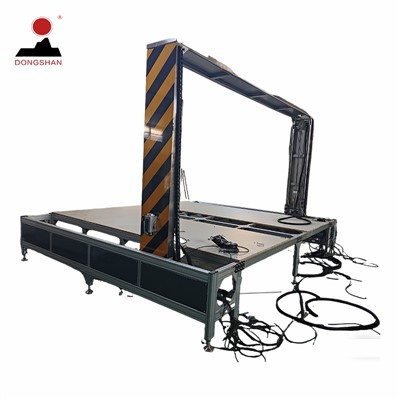
EPS Cutting Machine References: 1. “EPP Molding Process Parameters & Equipment Maintenance Guide”, Society of Plastics Engineers (SPE) Foam Division, 2022. 2. Hydraulic System Temperature Control for High-Cycle Molding Machinery, International Journal of Manufacturing Technology and Management, Vol. 35, No. 2, 2021. 3. “Preventing Thermal Overheating in Thermoplastic Shape Molding”, Plastics Machinery & Manufacturing, May 2023.
Hangzhou Fuyang Dongshan Plastic Machinery Co., Ltd.
Hangzhou Fuyang Dongshan Plastic Machinery Co., Ltd. is one of the most professional EPP molding machine manufacturers and suppliers in China, featured by quality products and low price. Please feel free to wholesale advanced EPP molding machine made in China here and get quotation from our factory. Customized orders are welcome.
Address: 101 Guanting, Baiqian Villige, Luzhu Town, Fuyang District, Hangzhou City, Zhejiang Province, China
E-mail: xu@dong-shan.cn
WebSite: https://www.epseppmachinery.com/
