Can light duty cable trays support fiber optic cables? Light Duty Cable Tray
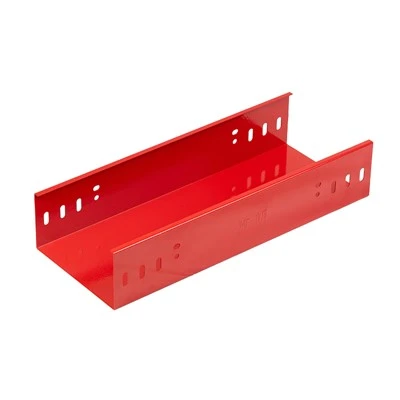
When I first started working in the cable tray industry over a decade ago, one of the most common questions I heard from engineers, contractors, and facility managers was exactly this: “Are light duty cable trays strong enough for fiber optic cables?” Back then, the answer wasn’t always clear—many people lumped all cable trays into one category, assuming heavier duty was the only safe option. But as someone who’s spent thousands of hours installing, testing, and advising on cable tray systems, I’ve learned that the truth is a lot more nuanced. Today, as a supplier of light duty cable trays, I want to break down this question scientifically, share real-world insights from projects I’ve worked on, and help you understand when light duty trays are a perfect fit for fiber optics—and when they might not be.
First, let’s get the basics straight. Light duty cable trays are designed for environments where the weight of the cables being carried is relatively low, and the load is distributed evenly. They’re different from medium or heavy duty trays, which are built to support heavier electrical cables, high-voltage lines, or larger bundles of wires. Fiber optic cables, in turn, have unique properties that make them different from traditional copper cables. For one, they’re much lighter—most single-mode fiber cables weigh between 5 and 15 pounds per 1000 feet, compared to copper power cables which can weigh 50 pounds or more per 1000 feet. That lower weight is a key point in whether a light duty tray can support them.
But support isn’t just about weight. When we talk about cable tray load capacity, there are two critical factors: uniform distributed load (UDL) and point load. Uniform distributed load is the total weight of the cables spread evenly along the length of the tray. Point load is the concentrated weight of heavy equipment, connectors, or pull points. For fiber optic installations, UDL is almost always the main consideration, since fiber cables are pulled and laid in long, continuous runs, not placed in heavy, concentrated bundles. Light duty cable trays are rated for UDLs typically ranging from 20 to 50 pounds per foot, depending on the material (aluminum vs. steel) and design. Most small to medium fiber optic networks—like those in office buildings, retail spaces, small data centers, or university dorms—don’t exceed that 20 to 50 pounds per foot range. That’s a big reason why light duty trays work so well here.
I can speak to this from personal experience. A few years back, I worked with a team outfitting a 10-story office building with fiber optic infrastructure for a new IT upgrade. The IT department had initially planned to use heavy duty cable trays, but when they ran the numbers, they calculated their total fiber load at just 28 pounds per foot—well within the 35 pounds per foot UDL rating of our light duty aluminum trays. We walked them through the load calculations step by step, showed them test data from our own lab where light duty trays supported fiber loads three times that amount without bending or deforming, and they went with our system. The installation went smoothly, and two years later, we did a follow-up inspection to find no signs of stress or sagging—something that’s a common concern with cable trays.
Sagging is another key point here. A cable tray that sags too much can cause problems for fiber optic cables. Unlike copper, which is flexible enough to handle a little extra stress, fiber cables can develop microbends if they’re pulled too tight or if the tray sags excessively. Microbends can cause signal loss, which is a big issue for fiber networks because they rely on precise light transmission. The maximum recommended sag for a cable tray is usually 1/4 inch per 10 feet of span. Light duty trays, when installed with proper span spacing (which we always advise our customers to follow—usually 5 to 8 feet for light duty, compared to 10+ feet for heavy duty), easily meet this sag limit when carrying fiber loads. In that same office building project, we installed our light duty trays at 6-foot spans, and even with the full fiber load, the sag was only 1/8 inch per 10 feet—half the recommended maximum.
But that’s not to say light duty cable trays are a one-size-fits-all solution. There are cases where they’re not the right choice for fiber optic cables, and it’s important to know those limits. For example, if you’re running a high-density fiber optic network with dozens of fiber bundles in a single tray, the total load can quickly climb past the light duty rating. A few years ago, a data center client reached out to me asking about light duty trays for their new server room fiber installation. When we calculated their total load—they planned to run 50+ fiber bundles in a single run—the UDL came to 65 pounds per foot, which was over the 50-pound maximum for our light duty trays. In that case, we recommended a medium duty tray instead, and they went with that, avoiding any risk of sagging or cable damage.
Another case where light duty trays might not work is in environments with dynamic loads. For example, if the cable tray is near heavy machinery that vibrates a lot, or if the tray is going to be accessed frequently for adding or removing fiber cables, the repeated point loads can add up. Our light duty trays are designed for static, evenly distributed loads, not constant dynamic stress. In those situations, a heavier duty tray is a better bet to prevent damage over time.
I also want to address a common misconception among installers: that all light duty cable trays are the same. As a supplier, I’ve seen a lot of cheap, low-quality light duty trays on the market that don’t meet industry standards. A tray that’s made from thin, flimsy steel or has a poorly designed cross-section might not support even a light fiber load, no matter what the rating says. That’s why it’s crucial to work with a supplier that follows industry standards like those set by the National Electrical Manufacturers Association (NEMA) or the Telecommunications Industry Association (TIA). Our light duty trays are tested to NEMA VE-1 standards, which means we can guarantee their load capacity and structural integrity for fiber optic applications. That testing includes bending tests, load tests, and corrosion resistance tests—all of which are important for ensuring the tray will hold up over the life of the network.
Let’s also talk about installation best practices, because even the best tray won’t work if it’s installed wrong. When using light duty trays for fiber optic cables, there are a few key steps to follow. First, make sure the tray is properly supported at the right span spacing. We always recommend spacing supports 5 to 6 feet apart for light duty trays when carrying fiber, which is closer than the 8 to 10 foot spacing for heavy duty trays. Second, avoid overfilling the tray. Fiber cables should have enough room to breathe—overfilling can put extra stress on the cables and increase the risk of microbends. A good rule of thumb is to fill the tray no more than 40% of its total capacity for fiber, which gives you room for future additions. Third, use proper fiber cable management accessories, like cable ties designed for fiber (not metal ties that can scratch the cable jacket) and bend restrictors at pull points. We stock a full line of accessories specifically for light duty fiber installations, and we’re happy to advise customers on which ones work best for their project.
Over the years, I’ve also noticed that more and more small to medium businesses are choosing light duty trays for their fiber networks because of cost savings. Heavy duty trays can be two to three times more expensive than light duty, and for many projects, that extra cost isn’t necessary. The office building I mentioned earlier saved about $12,000 on their cable tray system by going with light duty instead of heavy duty, which they reinvested in better fiber equipment. That’s a win-win for them, and it’s a reminder that light duty trays aren’t just for small jobs—they can be a cost-effective, reliable solution for many larger projects too, as long as the load calculations check out.
Of course, safety is still the top priority. Even if the load is within the tray’s rating, it’s important to account for future expansions. Fiber networks often grow over time, so you don’t want to install a tray that’s just barely enough for today’s needs, with no room for tomorrow. Our sales team always asks customers about their future growth plans when advising on light duty trays—if they think they might add 20 more fiber bundles in a year, we’ll help them size the tray accordingly, to make sure it will support that extra load without needing to replace the entire system.
Another point to consider is environmental factors. If your installation is outdoors or in a harsh environment (like a factory with lots of dust or moisture), our light duty trays are made with corrosion-resistant aluminum or galvanized steel, which can handle those conditions. We have customers using our light duty trays for outdoor fiber runs in industrial parks, and they’ve held up for 10+ years with no corrosion issues. That’s not to say light duty trays are impervious—if it’s a very harsh, corrosive environment, you might want to look at a coated heavy duty tray, but for most standard environments, light duty works fine.
I’ve also had customers ask me if light duty trays work with fiber optic cable types like loose-tube, tight-buffered, or breakout cables. The answer is yes—all of these fiber cable types are lightweight enough for light duty trays, as long as the total load is within the tray’s UDL rating. Loose-tube cables, which are commonly used for outdoor runs, are a little heavier than indoor tight-buffered cables, but even then, their weight is usually under 20 pounds per 1000 feet, which fits perfectly in a light duty tray.
Looking back on my career, the biggest mistake I see people make is assuming that heavier is always better. It’s not—when it comes to cable trays, the right size is the one that matches your actual load, not the heaviest one available. Light duty cable trays are a proven, reliable option for fiber optic cables in millions of installations across North America and beyond, and I’ve seen first-hand how they can save money without sacrificing performance.
But I’ll be honest—this isn’t a do-it-yourself question. If you’re unsure about your load calculations, your installation span, or whether light duty is right for your project, it’s best to talk to an expert. That’s where we come in. As a supplier of light duty cable trays, we don’t just sell products—we advise customers through every step of the process, from initial planning to post-installation support. We can help you run the load numbers, choose the right tray material and size, and make sure your fiber network is installed safely and correctly.
Whether you’re a contractor working on a small office build, a facility manager upgrading a retail space, or an engineer designing a new campus, light duty cable trays can absolutely support your fiber optic cables—if you do your homework on load, installation, and standards. If you have questions about your specific project, or want to learn more about our light duty cable tray solutions for fiber optic installations, don’t hesitate to reach out to our team to discuss your needs. We’re here to help you make the right choice for your network.
Light Duty Cable Tray References
- National Electrical Manufacturers Association (NEMA). VE-1: Cable Tray Systems. NEMA, 2020.
- Telecommunications Industry Association (TIA). TIA-569-B: Commercial Building Standard for Telecommunications Pathways and Spaces. TIA, 2018.
- Fiber Optic Association (FOA). Fiber Optic Installation Guidelines. FOA, 2021.
- Aluminum Association. Aluminum Cable Tray Design and Application. Aluminum Association, 2019.
Hebei Jinglang Industrial Co., Ltd.
As one of the most professional light duty cable tray manufacturers and suppliers in China, we also support customized service. We warmly welcome you to wholesale high quality light duty cable tray in stock here from our factory. If you have any enquiry about quotation, please feel free to email us.
Address: Nanxinzhuang Village, Daweihe Hui and Manchu Township, Wen’an County, Langfang City, Hebei Province
E-mail: wei32830@gmail.com
WebSite: https://www.jinglangcabletray.com/
