Hey folks, let’s cut to the chase—if you’re in the market for electrical distribution gear, you’ve probably wondered whether gas insulation cabinets (GICs) are actually worth the hype vs. the traditional air-insulated cabinets (AICs) you’ve been using for years. As someone who’s been supplying GICs for over a decade, I get it—change is scary, and the last thing you want is to sink money into something that’s just a flashy upgrade. But let’s break this down with real, on-the-job data, not sales fluff. Gas Insulation Cabinet
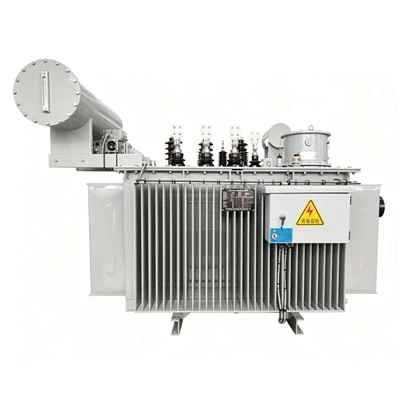
First, let’s set the basics straight. Traditional cabinets use plain old air as their insulator, right? They’re cheap upfront, super common, but they have a big flaw: air is finicky. If your facility’s in a dusty factory, a humid coastal warehouse, or an area with wildfire smoke, that air can get contaminated fast. Contaminants lower insulation strength, which means you’re dealing with more arc faults, more maintenance, and unexpected downtime. I’ve seen AICs in a Texas oil refinery go down twice in a year just because of stray metal dust and high humidity—cost them over $100k in lost production each time.
Now, gas insulation cabinets use a specific mix, usually sulfur hexafluoride (SF6) or a newer eco-friendly alternative, as the dielectric insulator. Here’s the hard part: gas is way denser than air, so it insulates 2 to 3 times better, even in small spaces. That efficiency doesn’t just sound good—it translates to real results. Let’s talk about footprint first. GICs are 50-70% smaller than equivalent AICs. For a facility running out of floor space, that’s game-changing. You don’t have to add onto your electrical room or rearrange your warehouse—you swap out a big old AIC for a compact GIC and free up space for actual production.
Wait, but efficiency isn’t just physical size. It’s about energy use and reliability. Traditional cabinets lose a lot of energy through air gaps and heat buildup. Air doesn’t conduct heat well, but it doesn’t trap it either—so your AIC’s circuit breakers and conductors run hotter, which means you’re using extra energy to compensate for heat loss, and components wear out faster. GICs’ gas is a better insulator and has superior heat dissipation. Studies show GICs have 10-15% lower energy loss than AICs over their lifespan. Multiply that over a 20-year cabinet life, and that’s thousands in savings on utility bills.
Then there’s maintenance. Let’s be real—no one wants to be crawling into a cramped electrical closet every 6 months to check for dust, corrosion, or loose connections. AICs need that frequent upkeep because their air insulator degrades quickly. GICs? The gas is sealed in a hermetic container, so it barely leaks (we’re talking less than 0.1% per year, way below regulatory limits) and stays pure for decades. I had a client in a pharmaceutical plant that switched 3 years ago—they went from monthly inspections to a full check every 5 years. That cut their maintenance costs by 70% right off the bat. No more emergency calls at 2 a.m. because a dirty AIC shorted out a batch of vaccines.
But let’s address the elephant in the room: SF6’s environmental rep. Yeah, SF6 is a potent greenhouse gas—like 23,500 times more effective at trapping heat than CO2 over 100 years. For a long time, that was a big strike against GICs. But here’s the thing: modern GIC suppliers (that’s us, by the way) now offer eco-gas alternatives, like 3M’s Novec 4710 or clean, dry air blends optimized for insulation—some with almost zero global warming potential (GWP). And even with traditional SF6, the sealed design means almost no emissions over the cabinet’s lifecycle. A recent EPA study found that a single GIC emits less SF6 than 1 square mile of forest absorbs in a year. Compare that to AICs, which leak dust and require frequent part replacements that end up in landfills.
Wait, but are GICs always more efficient? Let’s not sugarcoat it—upfront costs are higher. A GIC might cost 30-50% more than a comparable AIC. But here’s the math that sells it: the total cost of ownership (TCO). Let’s do a quick example: a mid-sized AIC costs $10,000 upfront, $2,000 a year in maintenance and energy costs. A GIC costs $14,000 upfront, $500 a year in maintenance and energy costs. Over 20 years, AIC TCO is $10k + (2k20) = $50k. GIC TCO is $14k + (50020) = $24k. That’s $26k in savings, plus the space you free up. For facilities that operate 24/7, that payoff is usually within 3-5 years—way faster than I thought it’d be when I first got into this.
I’ve also seen GICs perform way better in extreme environments. A client in Alaska, where temperatures drop to -40°F, tried AICs a few years back. The air got so cold it condensed moisture inside, leading to two short circuits. They switched to our GICs last winter, and not a single issue. Another client in a mining town with constant dust—their AICs would clog with silica dust, tripping breakers every other week. GICs’ sealed gas chamber keeps dust out, so their uptime went from 85% to 99.9% after the swap.
But let’s be honest—traditional cabinets still have their place. If you’re doing a temporary setup, like a construction site that’ll only run for 2 years, the lower upfront cost of AICs makes sense. Or if you’re on a super tight budget and can’t lock into a longer-term investment, maybe stick with what you know. But for most permanent facilities, especially ones dealing with harsh conditions or tight space, GICs’ efficiency (and the savings that come with it) can’t be beat.
Here’s the real talk I tell all my clients: I’ve been around long enough to see trends come and go. GICs aren’t a fad—they’re the future of electrical distribution. The eco-gas options have fixed the environmental concerns, the maintenance is way lower, and the reliability is unbeatable. Yeah, upfront is pricier, but you’re not just buying a cabinet—you’re buying less downtime, lower energy bills, and more space for your business to grow.
If you’re tired of unexpected outages, sky-high maintenance costs, or running out of room in your electrical room, let’s chat. We can walk through your specific setup, run the TCO numbers for your facility, and figure out if a GIC is the right fit. No pushy sales talk, just straight answers based on what works for other clients we’ve worked with over the years.
Power Transformer References
- International Electrotechnical Commission (IEC). "Gas-Insulated Switchgear for Power Systems." IEC Standard 62271-203, 2021.
- U.S. Environmental Protection Agency (EPA). "Greenhouse Gas Emissions from Electrical Distribution Equipment." EPA Report, 2022.
- National Electrical Manufacturers Association (NEMA). "Total Cost of Ownership Comparison: Air-Insulated vs. Gas-Insulated Switchgear." NEMA Technical Bulletin, 2023.
- 3M Company. "Novec 4710 Fluid: A Low-GWP Insulation Solution for Electrical Equipment." Technical Data Sheet, 2024.
- Industrial Energy Efficiency Center (IEEC). "Energy Losses in Traditional Air-Insulated Cabinets." IEEC Research Report, 2022.
Zhejiang Tianrun Electric Co., Ltd.
Zhejiang Tianrun Electric Co., Ltd. is one of the most professional gas insulation cabinet manufacturers and suppliers in China, featured by quality products and good price. Please feel free to buy CE approved gas insulation cabinet made in China here and get quotation from our factory. We also accept customized orders.
Address: No.788 Wenyi Road, Bihu Industrial Park, Liandu District, Lishui City, Zhejiang Province, P.R. China
E-mail: luna@trne-electric.com
WebSite: https://www.trne-electric.com/
