Can I use a piping connector in a vacuum system? This is a question that often pops up among professionals and enthusiasts working with vacuum systems. As a supplier of piping connectors, I’ve encountered this query numerous times, and today, I’d like to delve into this topic to provide you with a comprehensive understanding. Piping Connectors
Understanding Vacuums and Piping Connectors
Before we can answer whether you can use a piping connector in a vacuum system, it’s essential to understand the basic concepts of both vacuum systems and piping connectors. A vacuum system is designed to create and maintain a pressure lower than the ambient atmospheric pressure. Depending on the application, the degree of vacuum can vary significantly, from a near – complete vacuum in scientific research to a partial vacuum in industrial processes.
Piping connectors, on the other hand, are components used to join pipes together. They come in various types, such as threaded connectors, flanged connectors, compression connectors, and welded connectors. Each type has its own unique features, advantages, and limitations in terms of connection strength, leak – tightness, and ease of installation.
Factors to Consider When Using Piping Connectors in Vacuum Systems
-
Leakage Prevention
In a vacuum system, leakage is a critical concern. Even the smallest leak can compromise the system’s performance and efficiency. Piping connectors in a vacuum system must have excellent sealing properties to prevent air or other gases from entering the system. For example, threaded connectors may require the use of thread – sealing tapes or pastes to ensure a tight seal. Flanged connectors often use gaskets made from materials suitable for vacuum applications, such as rubber, silicone, or metal, to create a reliable barrier against leakage. -
Material Compatibility
The materials used in both the piping and the connectors must be compatible with the gases or fluids in the vacuum system and the operating conditions. For instance, in a high – vacuum system where the presence of outgassing can be a problem, materials with low outgassing rates, such as stainless steel or aluminum, are preferred. Some plastics may not be suitable in high – vacuum environments due to their relatively high outgassing properties and potential for degradation over time. -
Pressure and Vacuum Ratings
Every piping connector has a specified pressure and vacuum rating. It is crucial to ensure that the connector’s rating is appropriate for the specific vacuum system in which it will be used. If the vacuum level in the system exceeds the connector’s rated capacity, it can lead to structural failure, such as collapsing or separation of the connection, which can be extremely dangerous and cause significant damage to the system. -
Temperature Resistance
Vacuum systems may operate at a wide range of temperatures, from cryogenic conditions in some scientific experiments to high temperatures in industrial heat – treatment processes. Piping connectors must be able to withstand the temperature extremes without losing their integrity. For example, in a high – temperature vacuum furnace, connectors made from heat – resistant materials like ceramic – coated metals may be required.
Types of Piping Connectors Suitable for Vacuum Systems
-
KF (Quick – Flange) Connectors
KF connectors are widely used in vacuum systems, especially in the medium – vacuum range. They are easy to install and remove, making them suitable for applications where frequent disassembly and reassembly are required. The O – ring seals on KF connectors provide a reliable leak – tight connection, and they are available in a variety of sizes to accommodate different pipe diameters. -
CF (Conflat) Connectors
CF connectors are commonly used in high – vacuum and ultra – high – vacuum systems. They use metal gaskets, usually made of copper or aluminum, which can provide an extremely low – leakage connection. The design of CF connectors allows for a high – degree of precision alignment, which is essential for maintaining the integrity of the vacuum seal in demanding applications. -
Welded Connectors
Welded connectors offer the highest level of leak – tightness and mechanical strength. In vacuum systems where a hermetic seal is required, such as in semiconductor manufacturing or aerospace applications, welded connections are often the preferred choice. However, welding requires specialized skills and equipment, and it is a more permanent connection compared to other types of connectors.
Case Studies
Let’s take a look at a few real – world examples to illustrate the use of piping connectors in vacuum systems.
Case 1: Laboratory Vacuum System
In a research laboratory, a vacuum system is used for materials testing under low – pressure conditions. The system consists of glass pipes connected by KF connectors. The KF connectors are easy to install and can be adjusted easily, which is convenient for the scientists who need to reconfigure the system for different experiments. The O – ring seals on the KF connectors effectively prevent air leakage, ensuring the stability of the vacuum environment.
Case 2: Industrial Vacuum Furnace
An industrial vacuum furnace is used for heat – treating metal parts. The furnace operates at high temperatures and requires a high – vacuum environment. CF connectors are used to connect the stainless – steel piping in the system. The metal gaskets in the CF connectors can withstand the high temperatures and provide a reliable seal, preventing any air from entering the furnace and affecting the heat – treatment process.
Conclusion
In conclusion, yes, you can use a piping connector in a vacuum system, but it is crucial to choose the right type of connector based on the specific requirements of the system. Factors such as leakage prevention, material compatibility, pressure and vacuum ratings, and temperature resistance must be carefully considered.
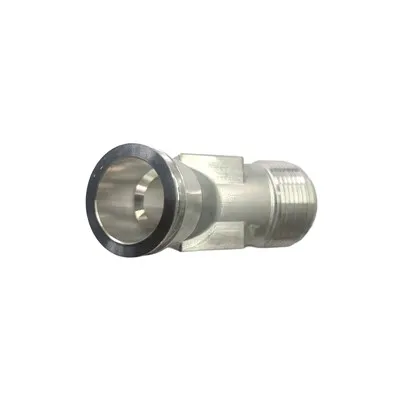
As a supplier of piping connectors, we offer a wide range of products suitable for different vacuum applications. Our team of experts can provide you with professional advice on selecting the most appropriate connectors for your vacuum system. Whether you are working on a small – scale laboratory project or a large – scale industrial application, we have the solutions to meet your needs.
Rubber Parts If you are interested in our piping connectors or need more information about using them in your vacuum system, please feel free to contact us. We are looking forward to discussing your requirements and helping you find the best – fit solutions.
References
- "Vacuum Technology Handbook"
- "Piping and Pipeline Engineering"
- Industry – specific technical papers on vacuum systems and piping connectors.
Jiangxi Zhiyi Machinery Manufacturing Co., Ltd.
As one of the most professional piping connectors manufacturers and suppliers in China, we also support customized service. Please rest assured to wholesale bulk piping connectors in stock here from our factory. If you have any enquiry about quotation, please feel free to email us.
Address: Jiahai Industrial Park, No. 2799 Tianxiang Avenue, High-tech Zone, Nanchang City, Jiangxi Province.
E-mail: zgjxzy@163.com
WebSite: https://www.chinazhiyi.com/
