Hey there, thanks for dropping by! If you’ve ever sat down to spec out industrial titanium bars for a project—whether you’re building aerospace parts, medical implants, heavy machinery, or something that needs to stand up to pressure and corrosion—chances are you’ve stumbled on that random term: Poisson’s ratio. I get it, it’s one of those engineering specs that sounds way more complicated than it needs to be, especially when you’re juggling 100 other supply chain or design questions. As someone who’s been an industrial titanium bars supplier for over a decade, I’ve had so many clients ask me, “Wait, what even IS Poisson’s ratio for our titanium bars, and why does it matter?” No stuffy textbook jargon, promise—let’s break this down like we’re geeking out over parts at a shop floor table, not writing a college paper. Industrial Titanium Bars
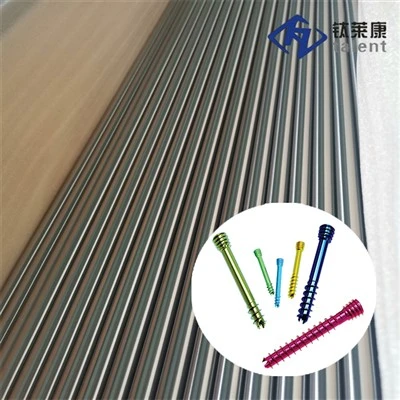
First off, let’s kill the confusion right away: Poisson’s ratio is basically a material’s way of saying, “If I pull on you one way, how much do you squish sideways?” Think of a rubber band. If you stretch a rubber band end to end, it gets thinner in the middle, right? That’s positive Poisson’s ratio—most common materials work this way. There’s a weird handful (like some foam or exotic lab-made stuff) that gets fatter when you pull, but that’s not our titanium. For our industrial titanium bars, the ratio is almost always a value between 0.32 and 0.34. Wait, that’s specific, right? But hold up—this isn’t a one-size-fits-all number. It shifts depending on which grade of titanium you’re using, how the bar was made, and even the temperature it’s sitting in. I’ve seen so many projects derailed because someone copied a Poisson’s ratio from a random website without checking the exact grade, so let’s get into that.
Let’s start with the most common grades we supply, because that’s what most clients actually ask about: Grade 2, Grade 5, Grade 7, and Grade 9. These are the workhorses of industrial titanium, used for everything from offshore oil pipelines to dental implants to race car suspension parts. Grade 2 is commercially pure titanium, super ductile, easy to weld, and the go-to for general industrial use. Its Poisson’s ratio? Right around 0.32. Now Grade 5 is Ti-6Al-4V—hands down the most popular titanium bar on the market, it’s strong, it’s lightweight, it’s used in so many aerospace and medical applications. Its ratio is a tiny bit higher, around 0.33. Grade 7 is a stabilized grade with palladium, way more corrosion resistant than Grade 2, great for chemical processing. That lands at roughly 0.32 too, same as Grade 2. Grade 9 is Ti-3Al-2.5V, super strong for its weight, used a lot in aircraft tubing and hydraulic lines—its Poisson’s ratio is around 0.34, the highest of the big four.
Why do these tiny differences matter more than you’d think? Let’s say you’re designing a part that’s going to be under cyclic load—like a landing gear strut on a small plane, or a pump component that’s expanding and contracting every minute. If you use the wrong Poisson’s ratio, your stress calculations will be off. For example, if you spec a Grade 5 bar and accidentally use Grade 2’s 0.32 instead of 0.33, you might miscalculate how much the part will stretch under load, leading to either over-engineering (wasting money on excess material) or under-engineering (catastrophic failure down the line). I’ve had a client who was building a custom hydraulic cylinder for a forestry machine run into this a few years back—they pulled a random number from a supplier’s generic spec sheet, didn’t check that their bars were Grade 9, and their initial prototype had leaks because they miscalculated the lateral expansion when pressure hit. We had to walk them through the correct ratio, adjust the part design, and save them a ton of downtime. That’s why this stuff isn’t just trivia—it’s a critical spec.
Now, how does how we make the bars affect Poisson’s ratio? Because when I say we supply industrial titanium bars, we don’t just melt titanium and pour it into a mold. We go through hot rolling, cold drawing, annealing—all steps that tweak the material’s internal structure, and that changes Poisson’s ratio a little. For example, cold drawn bars (we call these “finished bars” at our shop) have a tighter, more uniform grain structure than hot rolled bars. The cold working process strains the crystals a bit, so the Poisson’s ratio ends up being slightly lower—around 0.001 to 0.002 lower—than hot rolled versions of the same grade. Annealing, which is heating the bars up slowly to soften them after working, brings that ratio back a tiny bit because the grains relax. We always note this on our material test reports (MTRs) that we send with every order, so clients don’t have to guess. That’s a big part of why working with a reputable titanium supplier matters—we don’t just send you a bar and a generic spec sheet; we tell you exactly what you’re getting and how it was made, because that changes the numbers you rely on.
Temperature is another factor that people sleep on. Titanium is used in some wild environments: offshore oil rigs in the Arctic, jet engine parts that get up to 600°F, medical implants inside the human body (that’s around 98.6°F, so that’s moderate). As temperature goes up, Poisson’s ratio for titanium actually increases slightly. For Grade 5, at room temp it’s 0.33, but at 500°F it’s around 0.35, and at cryogenic temps (like -300°F, which is common for aerospace components) it drops to around 0.315. If you’re designing a part that operates at extreme temps, that tiny shift can make a huge difference. For example, a cryogenic fuel line made of titanium—if you use the room temp Poisson’s ratio and don’t account for the lower ratio at cold temps, you might end up with a line that’s too stiff and cracks under the extreme contraction. We always ask clients about their operating environment upfront, so we can point out these small but important nuances, no matter what grade of industrial titanium bars they’re getting from us.
Wait, let’s get one thing straight: Poisson’s ratio for titanium is way higher than most common metals. For example, steel has a Poisson’s ratio of around 0.29, aluminum is about 0.33, copper is around 0.34. So titanium falls right in that middle band, which makes it super versatile. That’s part of why it’s so popular—its Poisson’s ratio pairs with its strength and light weight for such a wide range of applications. But if you’re working with other materials alongside titanium, that ratio difference matters too. For example, if you’re bonding a titanium bar to an aluminum component, the different Poisson’s ratios mean they’ll expand or contract differently under load, which can cause stress at the bond line. That’s something we help clients with all the time—we don’t just sell you bars; we give you tips on how to integrate them into your whole design.
A lot of new engineers or procurement people I talk to ask, “Why can’t I just use an average number for titanium bars?” Let’s be real—you could, but that’s how mistakes happen. I’ve seen clients order bars from a cut-rate supplier who just uses a generic 0.33 for all titanium grades, and when they put the part through testing, it fails because their bars were Grade 9, which has a higher ratio. That’s why MTRs are non-negotiable for us. Every single batch of industrial titanium bars we send out comes with an MTR that lists the exact Poisson’s ratio, along with tensile strength, yield strength, corrosion resistance, and all the other specs you need. We test each batch in-house, so we’re not just copying numbers from a textbook—we’re giving you the actual data for the bars you’re holding.
Let’s also bust a common myth here: Poisson’s ratio only matters for fancy aerospace or medical parts. No way. We supply titanium bars to a company that makes backyard compost turners (yes, really) because the corrosion resistance of titanium means their parts don’t rust and break down. Their design team uses Poisson’s ratio to calculate how much the turning arms flex when they dig into wet compost, so they can get the right thickness without making the arms too heavy. That’s a totally mundane application, but the same engineering math applies. Another client makes custom golf club heads—they use small titanium bars, and they tweak the Poisson’s ratio to get the exact flex and weight distribution that gives golfers more distance. So it’s not just for rockets and implants; it’s for anything that needs to move, hold shape, or not break under stress.
Now, if you’re here because you’re currently shopping for industrial titanium bars, let’s wrap this up with what you actually need to know before you order. First, confirm what grade you need—Grade 2 for general corrosion resistance, Grade 5 for maximum strength to weight, Grade 9 for high-pressure tubing, etc. Second, ask about the manufacturing process (hot rolled, cold drawn, annealed) because that tweaks Poisson’s ratio and other specs. Third, make sure you get an MTR for every batch, not just a generic spec sheet. And if you’re not sure what Poisson’s ratio you need for your specific application, just ask us—we’ve got engineers on our team who can walk you through it, no sales pitch, no confusing jargon.
At the end of the day, Poisson’s ratio is just one of those tiny, important details that makes a good industrial titanium bar work for your project. Too many suppliers treat it like a throwaway number, but we take it seriously because we’ve seen what happens when you get it wrong. We’ve been supplying industrial titanium bars for years, and we’re not just here to send you a product—we’re here to make sure you get the right bar, with the right specs, for exactly what you’re building.
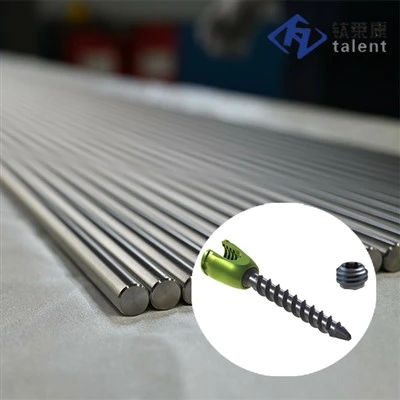
If you’re ready to chat about your project, need a quote for a batch of bars, or have more questions about Poisson’s ratio, grades, or anything titanium, don’t hesitate to reach out. We’re here to help make your project go smoothly, no matter how big or small.
Titanium Plates References
ASM International. (2019). Titanium and Titanium Alloys. Materials Park, OH: ASM International.
NASA. (2021). Material Properties Database: Titanium Alloys. Washington, DC: National Aeronautics and Space Administration.
Titanium Industry Association. (2022). Industrial Titanium Bar Specs and Material Characteristics. Washington, DC: Titanium Industry Association.
Baoji Tailaikang High-Tech Metal Materials Co., Ltd.
With abundant experience, we are one of the most professional industrial titanium bars manufacturers and suppliers in China. Please feel free to buy industrial titanium bars for sale here and get pricelist from our factory. For price consultation, contact us.
Address: No. 1, Southeast Cross of Gaoxin Avenue and Fenghuang 3rd Road, High-tech Development Zone, Baoji City, Shaanxi Province, China
E-mail: sale@tlkjs.com
WebSite: https://www.tlkmetal.com/
