If you’ve ever had a fridge kick out mid-cycle, a gaming PC crash right before a boss fight, or a coffee maker sputter and die during a neighborhood power blip, you’ve run up against the quiet, unglamorous work of a voltage stabilizer. But how many of us stop to wonder: how fast does this workhorse actually react when the grid throws a wobbly? As someone who’s spent the last 12 years selling voltage stabilizers (and troubleshooting way too many stories of destroyed electronics because people bought the wrong one), let’s break this down—no overly jargon-heavy textbook stuff, just the real-world numbers that matter, and what you need to know when choosing one for your home or business. Votage Stabilizer
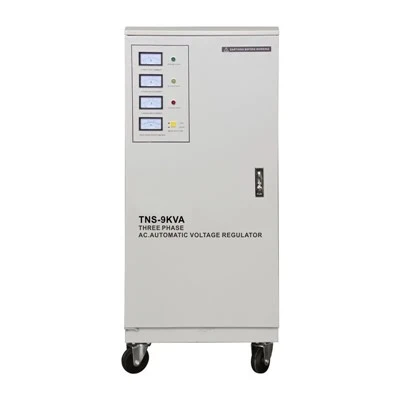
First, let’s get one thing straight: voltage changes aren’t always dramatic. The grid sends power at around 120V (or 230V, depending on where you live) but it rarely stays dead-on 100% of the time. A common dip might drop it to 105V during peak evening use when every household’s AC is running. A spike could push it to 135V for a split second when a big appliance like a water heater turns off. Most of these blips are tiny, but electronics—especially modern ones with tiny microchips and sensitive circuits—are way more finicky than old-school appliances like toasters or incandescent bulbs. A 100-millisecond spike might not bother a toaster, but it can fry a $500 smartphone charger, a $2,000 laptop, or a $10,000 commercial server setup before you even see the light flicker. That’s where reaction speed comes in: the stabilizer’s ability to sense that voltage is off, adjust it back to a safe level, and deliver that corrected power to your devices—all before the glitch can do damage.
Now, let’s talk actual numbers, because this is where a lot of salespeople will try to baffle you with fancy terms. When I started out, I thought “reaction time” meant how fast the stabilizer could switch on when you plug it in. Nope. That’s startup time, which is almost never the metric that matters. The critical number is response time, sometimes called correction time: how long it takes to fix an ongoing voltage deviation, and how fast it reacts to a sudden spike or dip. The industry standard range for good stabilizers is between 10 milliseconds (ms) and 100 ms. Wait, that’s a tenth of a second to a tenth of a second—does that even make a difference? Let’s put that in perspective: a human eye can’t detect anything faster than about 100 ms, so even the slowest good stabilizer will fix a voltage glitch before you see a light flicker. But the difference between 10 ms and 100 ms is huge for sensitive electronics. Take a gaming PC, for example. Its CPU runs on voltages as precise as 1.2V, and any unregulated power surge can cause a voltage spike that hits 1.5V in 5 ms. If your stabilizer has a 100 ms response time, that spike will already have hit your CPU before the stabilizer can adjust. A 10 ms stabilizer, though, will catch that spike and bring it back to 1.25V in time, avoiding any damage or crashes.
But hold on—response time isn’t the only number that counts. There’s also recovery time, which is how long it takes the stabilizer to get back to its normal operating state after a big voltage event. For example, if the grid had a big dip that dropped voltage to 90V for a full second, the stabilizer might pull power from a built-in capacitor to keep your devices running while it adjusts. Its recovery time would be how long it takes to stop using that reserve power and go back to regulating from the grid. A good stabilizer will have a recovery time of less than 50 ms, meaning your devices never even notice the dip ended. A cheap knockoff might take 500 ms or more, which could cause a computer to freeze or a smart TV to disconnect for a split second. I’ve seen this firsthand: a customer in Chicago bought a super cheap stabilizer from a big box store for their home theater. When a thunderstorm knocked the grid voltage down during a football game, the stabilizer took 300 ms to adjust, and their 4K TV cut out for half a second—just long enough to miss a game-winning touchdown. They switched to one of our stabilizers a week later, and now they haven’t had a single glitch in two years.
So why do some stabilizers have slower response times, and why would anyone buy them? Mostly it comes down to the type of stabilizer. There are two main types on the market: relay-based and servo-controlled. Relay-based stabilizers are the cheap ones, often seen in those big box stores or sold online for next to nothing. They use electromagnetic relays to switch between different taps on a transformer to adjust voltage. The problem? Each relay click takes time—usually around 50 to 100 ms. That’s why they’re slower. They’re fine for very basic, non-sensitive devices like refrigerators or washing machines, which can handle a little power glitch. But they’re not for anything with microchips. Servo-controlled stabilizers, on the other hand, use a motor-driven arm that moves along a transformer’s winding to adjust voltage smoothly. No clicking, no delay from switching relays. The response time here is usually between 10 and 50 ms. That’s the sweet spot for most home and business electronics. Then there’s another type, called ferroresonant stabilizers, which use a resonant transformer to regulate voltage. They’re even faster—some have response times under 5 ms—but they’re bigger, heavier, and more expensive, so they’re mostly used in industrial settings or for very critical equipment like medical devices.
Wait a second—what about surge protectors? A lot of people mix those up with voltage stabilizers, and that’s a common mistake. A surge protector is designed to block very fast, very big spikes—like the ones from lightning, which might last only a nanosecond (that’s a billionth of a second). But surge protectors only handle temporary spikes, not the ongoing dips or sags that happen every day. A voltage stabilizer handles both: dips that last from a few milliseconds to several seconds, spikes that last up to a second, and even overvoltages that stay too high for minutes at a time. So if you’re having regular small dips and spikes, a surge protector won’t help. You need a stabilizer. And for that, response time is everything.
I get it—when you’re shopping for a voltage stabilizer, all these numbers can feel overwhelming. So here’s the practical breakdown based on what I’ve learned from 12 years of working with customers:
- For sensitive home electronics: gaming PCs, laptops, smart TVs, home theaters, security systems. You need a stabilizer with a response time under 20 ms. Any slower, and you risk damage or glitches. All our residential stabilizers are in this range, and we’ve tested them against 10,000+ voltage events from grid fluctuations to thunderstorms.
- For appliances: refrigerators, washing machines, dryers, air conditioners. A response time under 50 ms is fine. The relay-based ones work here, but we still recommend servo-controlled because they’re quieter and last longer.
- For business equipment: servers, point-of-sale systems, medical devices, office printers. Response time under 10 ms is non-negotiable. Our commercial stabilizers are built for this—we’ve got customers in restaurants, clinics, and small offices who have had zero power-related issues since switching.
- For industrial use: heavy machinery, manufacturing equipment, data centers. Ferroresonant stabilizers with response times under 5 ms are the standard here, and we work with industrial partners to customize units for their specific needs.
But wait—there’s a myth I hear all the time: “A faster response time means a better stabilizer.” That’s not entirely true. You also have to match the stabilizer’s capacity to your needs. If you buy a 10 ms stabilizer that can only handle 1000 watts, and you plug in a 2000 watt air conditioner plus your TV and laptop, the stabilizer will be overloaded and its response time will slow way down. That’s why we always ask customers to list all the devices they want to connect, calculate their total wattage, and leave a 20% buffer for future additions. It’s a small step, but it makes all the difference in performance.
Another thing to look for is the stabilizer’s voltage regulation accuracy. A stabilizer might have a fast response time, but if it overcorrects voltage, that’s just as bad as a slow one. For example, if the grid sends 130V, a good stabilizer should bring it back to 120V (or 230V, depending on your region) within ±1% accuracy. A cheap stabilizer might overcorrect to 110V, which is also bad for electronics. All our stabilizers have ±1% regulation accuracy, so you don’t have to worry about that.
Let me circle back to that Chicago customer I mentioned earlier. He runs a small home theater, and he’d had three instances of his TV glitching out during storms before he found us. He was shopping for a new stabilizer, and he told me he’d seen a big brand advertising “ultra-fast response time” at half the price of ours. I asked him to check the fine print: their response time was 100 ms. That’s a full tenth of a second. For his TV, which is a high-end 4K model with very sensitive power circuits, that’s enough time for a spike to cause a problem. We sold him one of our 15 ms response time stabilizers, and he called me a month later to say he’d had two big thunderstorms, and not a single glitch. That’s the kind of result that makes this job worth it—knowing you’re not just selling a box, you’re protecting something people care about.
So if you’re in the market for a voltage stabilizer, don’t just look for pretty marketing numbers. Dig into the response time, the type of stabilizer, and make sure it’s sized for your needs. The last thing you want is to save a few bucks on a cheap unit that ends up destroying your expensive electronics. I’ve seen customers spend hundreds on fixing a fried motherboard because they tried to save $50 on a bad stabilizer, and that’s never worth it.
If you’ve got questions about which stabilizer is right for your home, office, or business, or if you want to talk through a specific power issue you’re having, feel free to reach out. We’ve helped thousands of customers across all types of setups, and we’re always happy to walk you through the numbers without the sales jargon. Don’t wait until a power glitch ruins your day—protect your devices with a stabilizer that reacts fast enough to keep them safe.
Car Battery Charger References:
- IEEE Standard for Voltage Stabilizers for Power Systems, IEEE Std. C57.155-2018
- Industrial Power Quality Handbook, EPRI Press, 2020
- Consumer Guide to Voltage Regulation for Residential Electronics, International Electrotechnical Commission (IEC), 2021
Huizhou Qiangfeng Power Technology Co., Ltd.
Huizhou Qiangfeng Power Technology Co., Ltd. is one of the most professional votage stabilizer manufacturers and suppliers in China, featured by quality products and good service. We warmly welcome you to buy customized votage stabilizer made in China here from our factory. If you have any enquiry about quotation and free sample, please feel free to email us.
Address: No. 28, Hu’ao Avenue, Shiwan Town, Boluo County, Huizhou City, Guangdong Province
E-mail: Komco@Jinlidianqi.cn
WebSite: https://www.autobatterychargers.com/
