Hey there, if you’ve ever dived into the world of precision components for heavy machinery, automotive engines, or even small electronics, you’ve probably stumbled on wave springs—those tiny, clever little coils that replace standard helical springs in tons of applications. As someone who’s been a wave spring supplier for over a decade, I get it: when a customer first reaches out asking, “What’s the cost of a wave spring?” they’re rarely just looking for a number. They’re trying to figure out if this part fits their budget, if it’s worth switching from what they’re currently using, and what hidden costs might be lurking they haven’t thought about yet. Today, I’m breaking down all the factors that go into wave spring pricing, no corporate jargon, just real talk from someone who’s sold these things for years. Wave Spring
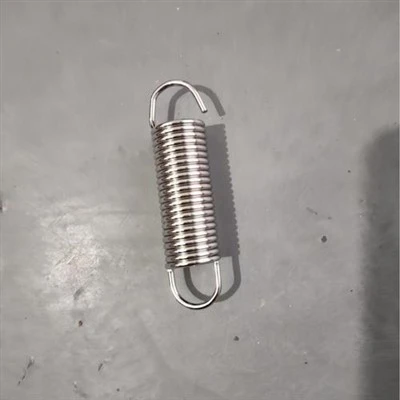
First off, let’s get one thing straight: there’s no one-size-fits-all price tag for a wave spring. I’ve quoted ones for a $50 industrial pump that went for $0.10 each, and ones for a high-performance aerospace actuator that were $120 a pop. The difference isn’t just “big vs. small”—it’s all about how the spring is built and what it’s built for. Let’s start with the most basic building block: material. Most wave springs are made from stainless steel (like 302 or 316) because it’s durable, rust-resistant, and works for most general use cases. 302 stainless is our go-to for 70% of orders, and that runs a few cents cheaper than 316, which has extra corrosion resistance for things like marine equipment or medical devices that get sterilized a lot. If a customer needs something even stronger, like for extreme high temperatures or heavy loads, we might use chrome silicon or Inconel. Inconel alone can double or triple the cost of a spring, just because the raw material is way more expensive and harder to work with.
Next up: wave geometry. Wait, what’s that? Think of a standard helical spring—it’s just a tight coil. A wave spring has one or more “waves” along its circumference, like a sine wave, that gives it the spring force without being as thick or heavy. The number of waves, their height, and the overall diameter of the spring all change the price. A 1-inch diameter single-wave spring is way cheaper than a 10-inch multi-wave spring, right? But even small differences matter. For example, a 0.5mm wave height is easier to stamp out in bulk, so those run cheaper than a 1mm wave that needs more precise tooling. And if you need a custom wave pattern—like a special shape to fit a weird space in a custom machine—forget that “standard” pricing; we have to design new tooling, which adds one-time costs, but often makes sense for a customer’s long-term production.
Then there’s load and deflection. That’s just how much force the spring has to push or pull, and how much it compresses before it hits that force. If you need a spring that exerts 10 pounds of force at a specific compressed height, we have to calculate exactly how many waves, material thickness, and diameter to get that right. The more precise the load requirement, the more work it takes, and the higher the price. I’ve had customers come in saying “just give me a wave spring” and then when we explain that their current helical spring is exerting 50 pounds but they only need 20, we can make a custom one that fits their exact specs, saves them space, and is actually cheaper than switching to a different helical spring that has to be modified. That’s a win, but it means a custom design step, so we have to factor that in.
Wait, let’s not forget manufacturing method. Wave springs can be stamped or coiled. Stamped ones are made by cutting a flat metal strip, stamping the wave shape into it, and then rolling it into a coil. These are super cheap for high volume—we can make thousands a day with automated stamping presses. Coiled wave springs are made by winding a wire into a wave shape, like a regular spring, and then machining the waves. These are better for high loads, larger diameters, or very precise applications, but they’re way more labor-intensive, so each one costs more. A lot of new customers don’t realize that and think a coiled spring is just a fancy version of a stamped one, but the price difference is massive for small orders.
Now, order quantity. That’s the biggest one for most small to mid-sized customers. If you need 10 wave springs for a prototype, we can’t just run a full production batch—we have to set up the tooling, run a small job, and that makes each one more expensive. Prototypes might be $5-$20 each, depending on specs, because it’s a small run. But if you need 10,000 of the same spring, the price per unit drops to pennies, because we’re spreading the tooling and setup cost across a lot of parts. I always tell customers: if you’re thinking about switching to wave springs long-term, even if you need a lot right now, it’s worth placing a larger initial order to save per unit, as long as you have storage space. We also offer volume discounts, which is non-negotiable—big orders get better pricing, no exceptions.
But here’s the part most customers don’t ask about, and it’s the stuff that adds hidden cost: surface finish and coatings. If a spring is going into a medical device that’s implanted, it needs a passivated finish to prevent metal particles from flaking off. That’s an extra cost. If it’s going into a food processing machine, it needs to be food-grade, so no special coatings that can leach into food. For outdoor or marine applications, a zinc or nickel plating adds corrosion resistance, which adds a few cents per unit, but saves you from replacing springs every six months. Skipping that might seem like a short-term win, but if you have to shut down a production line because a spring rusted and broke, that’s way more expensive than the coating.
Wait, also, tolerance. Precision is key for wave springs, right? A spring that’s off by a tiny bit in its height or force can mess up an entire assembly. If you need super tight tolerances, like within 0.01mm, that means more inspection time, more precise tooling, so higher cost. Standard tolerances are usually enough for most industrial and automotive uses, but aerospace or medical applications need that tight precision, so that bumps up the price. I had a customer a few months back who tried to use a standard tolerance wave spring in a pacemaker, and it failed because the force was off by 5 pounds. He ended up having to rework all his parts, which cost him way more than just going with the precision spring in the first place. That’s the hidden cost no one thinks about.
Let me also talk about the alternative, because that’s a big part of pricing. A lot of people ask, “Why not just use a standard helical spring? It’s cheaper.” But wave springs don’t just cost less for the same performance—sometimes they’re worth a little extra because they save space and weight. For example, in a transmission, every millimeter of space counts. A wave spring is half the thickness of a helical spring with the same force, so you can fit more parts in the same space, or make the whole assembly smaller. That saves the customer money on the overall product, even if the spring itself is a tiny bit more expensive. I always explain that to people: the cost of the spring isn’t just the spring, it’s the impact it has on your entire design.
Now, let’s get real about what you can expect to pay, across different use cases. For prototype or small orders (under 100 units), general-purpose stainless steel stamped wave springs: $0.50 to $5 each. For high-volume orders (10,000+ units), same specs: $0.05 to $0.30 each. If you need custom materials (like Inconel) or coiled wave springs, that jumps to $2 to $5 each for prototypes, and $0.50 to $2 each for volume. Precision, medical/aerospace-grade springs? Prototypes start at $10, volume at $1 each, but those are super specialized.
But here’s the thing: I’ve seen a lot of customers chase the lowest price and end up with bad parts. Like, a guy who bought cheap stainless steel wave springs from a no-name supplier for his agricultural equipment, and within a season, half of them rusted because they used cheap, low-grade steel. He had to replace all of them, and also fix the equipment they damaged, which cost him way more than if he’d bought a slightly more expensive quality spring from the start. Quality matters, and as a supplier, I’d rather quote you a fair price for a spring that will last than sell you something that breaks and makes you come back mad.
So, what do you need to figure out before asking for a quote? If you come to me with specs, here’s what I’m gonna need: overall diameter, inner diameter, material type, required load and deflection, quantity, any special finishes or coatings, and what the spring is going to be used for. The more details you give me, the more accurate my quote will be—no hidden fees, no surprises. For example, if you tell me it’s for a commercial dishwasher, I know to ask about corrosion resistance, so I’ll include that in the quote, not hit you with it later.
At the end of the day, wave spring pricing is all about matching the part to your needs. It’s not just a number on a page; it’s about reliability, performance, and long-term cost savings. If you’re tired of dealing with springs that don’t fit, break too often, or blow your budget, I’m here to help. We work with everyone from small startup engineers building prototypes to big industrial manufacturers needing bulk orders, and we’ll give you a fair, transparent quote that fits your project. Stop guessing at pricing, stop dealing with unreliable parts, and let’s chat about what you need—we can find a wave spring that works for your budget and your application.
If you’re ready to talk specifics, just reach out. I don’t do weird hidden costs or push you into parts you don’t need. I’ve been doing this long enough to know that the best relationships with customers come from being honest about what a part costs, why it costs that, and making sure you get exactly what you need without overpaying. So don’t hesitate—let’s get your project moving with the right wave spring at the right price.
Leaf Spring References:
- Spring Manufacturers Institute. (2021). Technical Guide for Wave Springs and Specialty Wave Components. SMI International.
- ASME B18.21.1. (2022). Compression Wave Springs: Standard Specification. American Society of Mechanical Engineers.
- Rumbarger, J. H., & Shigley, J. E. (2019). Spring Design Handbook (3rd ed.). Industrial Press.
- Food and Drug Administration. (2020). Medical Device Component Material and Finish Guidelines. U.S. Department of Health and Human Services.
- Automotive Industry Action Group. (2021). Precision Component Tolerance Standards for Suspension and Transmission Parts. AIAG.
Shengzhou Deyuxiang Hardware Accessories Co., Ltd.
We are one of the most professional wave spring manufacturers and suppliers in China, also support customized service. With abundant experience, we warmly welcome you to buy high quality wave spring made in China here and get pricelist from our factory. For price consultation, contact us.
Address: No. 38, Caosheng Road, Caoqiao Street, Pinghu City, Jiaxing City, Zhejiang Province
E-mail: 877286126@qq.com
WebSite: https://www.dyx-spring.com/
