Can a Reach-In Refrigerator Be Stacked with Another Appliance? Reach-in Refrigerator
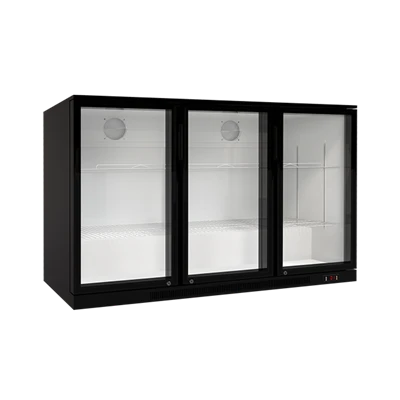
If you’ve ever worked in commercial kitchen layout, food service storage planning, or equipment fleet expansion, you’ve likely faced the same tight-spaces dilemma: how do you maximize cold storage without cramming your back-of-house (BOH) area so full that airflow or safety becomes a risk? As a reach-in refrigerator supplier, this question comes up at least a few times a week from new restaurant owners, kitchen designers, and even small catering teams who want to add more capacity without renovating their entire space. The short answer isn’t a simple “yes” or “no”—it depends on the type of appliances you’re stacking, how you install them, and how your reach-in unit is engineered to perform. Let’s break this down from the perspective of someone who’s sold, installed, and troubleshooted commercial reach-ins for over a decade, so you get practical, real-world insights instead of generic manufacturer jargon.
First, it’s critical to distinguish between reach-in refrigerators and the other appliances you might consider stacking on top of them. Reach-in refrigerators are purpose-built for consistent, low-temperature food storage, with insulated walls, dedicated compressor systems, and temperature controls calibrated to hold 33–40°F for fresh produce, dairy, and ingredients. The most common candidates for stacking are light-duty items like under-counter freezers, beverage dispensers, or even compact commercial dishwashers—but you can’t stack heavy gear like 50-quart mixers, bulk dry storage cabinets, or gas ranges on a reach-in. That’s a rule I stick by, and it’s rooted in basic engineering that many first-time buyers overlook. Reach-ins have a top deck designed for light, temporary items, not static, heavy loads. For example, a standard 48-inch reach-in fridge weighs around 300 pounds empty, and its structural framing is built to support roughly 150 pounds of evenly distributed weight on the top surface. Stack a 200-pound commercial dishwasher on top, and you risk warping the unit’s top frame, cracking the insulation seals, or even shifting the refrigerator out of level—all of which will kill your energy efficiency and could lead to costly door gaskets failing or refrigerant leaks.
But even when you’re only stacking compatible, light appliances, the bigger risk isn’t structural damage—it’s airflow. This is where most amateur installers go wrong, and it’s the reason I always stress to customers that stacking reach-ins is only safe if you maintain proper clearance for both units’ cooling systems. A reach-in refrigerator’s compressor and condenser coil are usually located at the bottom (for under-counter models) or the back wall (for full-size reach-ins, though some compact designs have bottom-mounted coils too). If you stack an appliance on top, you block the warm air that the reach-in needs to vent; over time, the compressor has to work overtime to keep the temperature setpoint, which raises energy bills by 20–30% (I’ve seen this data from multiple service calls over the years) and cuts the reach-in’s lifespan by up to 5 years. The same goes for the appliance on top: most commercial under-counter freezers and beverage dispensers have their own ventilation needs, and being trapped under a heavy, insulated fridge can cause that unit to overheat mid-shift, especially during peak service.
There’s a key exception to the stacking “light only” rule: some modern reach-in refrigerators are designed for stacked installations, with reinforced top frames and dual ventilation systems. When I’m talking to a customer who’s considering stacking, the first thing I do is ask for the model number of their reach-in, because not all units are built the same. For example, our own line of commercial reach-ins includes a “Stackable Pro” model that has a 300-pound top load rating and 6-inch dedicated vent channels on the top surface, which direct warm air away from the upper appliance. This model is engineered so that when you stack a compatible under-counter freezer on top, you only need 2 inches of clearance at the back for airflow, instead of the 12 inches required for a standard reach-in. If a customer has a standard, non-specialized reach-in, I still tell them it’s possible—but only if they build a custom vent system and reinforce the top. One recent client of mine, a small café in Portland, did this to stack a 48-inch standard reach-in with a compact commercial coffee brewer. They added 4-inch metal vent brackets along the back and sides of the top appliance, and placed 1-inch rubber spacers between the two units to create a gap for air flow. It worked for them, but it required a small custom modification that isn’t necessary with a purpose-built stackable model.
Another factor to consider is food safety, which is non-negotiable in commercial kitchens. The U.S. Food and Drug Administration (FDA)’s Food Code has specific rules about equipment placement that many operators don’t know about. Section 3-304.11 of the FDA Food Code requires that all cold storage equipment has unobstructed access for cleaning, and that air circulation is maintained around the compressor and condenser to prevent temperature fluctuations. If you stack a reach-in and block the condenser coil, you run the risk of the refrigerator reaching temperatures above 40°F, which is the threshold for foodborne bacteria growth. I’ve had three service calls in the last year where a restaurant’s stacked reach-in was causing hot spots on stored lettuce and raw chicken—turns out the owner had stacked a soda cooler on top without adding any ventilation, and the compressor was overheating so badly that the internal temperature spiked to 52°F overnight. That’s a violation, not just a minor inconvenience, and it can lead to health department fines that range from $1,000 to $10,000 depending on the location.
If you do decide to stack a reach-in refrigerator, there are a few best practices I recommend to avoid issues, based on years of on-site work. First, verify your reach-in’s load capacity and ventilation requirements from the manufacturer—don’t assume all units are the same. If you can’t find the spec sheet, our customer service team is always happy to help, because that’s part of what we do as a supplier, not just sell units. Second, only stack appliances that are rated for static load on top—avoid any appliance that vibrates heavily (like a commercial mixer) because that can loosen the reach-in’s structural connections over time. Third, add at least 2 inches of clearance between the two units and along the back wall to allow air flow; if you’re stacking multiple units, leave even more space between the top appliance and the ceiling of your kitchen to prevent hot air from getting trapped. Fourth, use a level to make sure both units are perfectly aligned—even a 1-degree tilt can cause a reach-in’s door to not seal properly, leading to energy loss and temperature swings.
There are also alternatives to stacking that are often better than trying to stack two appliances, depending on your space. For example, many commercial kitchens now use under-counter reach-ins instead of full-size units for floor space, which frees up counter and wall space for other appliances. Or, if you need more cold storage, a side-by-side reach-in setup is often more efficient than stacking, because it doesn’t block airflow and has a lower risk of structural damage. I recently worked with a catering company that was trying to fit four reach-ins into a 10×12 BOH area; instead of stacking, we installed two standard reach-ins on the floor, and two compact under-counter reach-ins mounted on a wall rack, which gave them 20 cubic feet of extra storage without any of the stacking risks. That’s not the right fit for every space, but it’s worth considering before you drill holes or modify your equipment.
As a reach-in refrigerator supplier, I always tell customers that stacking is a viable option if it’s done correctly, but it’s not a one-size-fits-all solution. The biggest mistake I see is customers buying a cheap, standard reach-in, then trying to stack a heavy appliance on top without checking the specs. That leads to early equipment failure, higher energy costs, and even food safety risks—none of which are worth the short-term space savings. If you’re planning to stack appliances in your commercial kitchen, start by reaching out to a supplier who understands commercial refrigeration, not just residential units, and ask about the structural and ventilation needs of your specific reach-in. We get a lot of customers who come to us after having issues with stacked units from another brand, and we’re happy to walk through the proper installation steps or recommend a stackable model that’s designed to work for your layout.
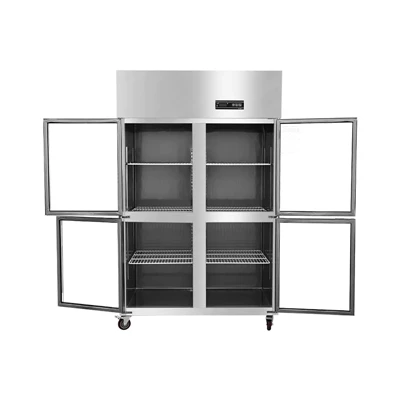
At the end of the day, commercial kitchen space is a premium, and any solution that helps you use it effectively is worth exploring— as long as it’s safe and efficient. Stacking a reach-in refrigerator with another appliance isn’t a bad idea, but it requires careful planning, the right equipment, and a little extra attention to ventilation and structural limits. If you’re ready to explore your options, feel free to connect with our team to discuss your space, equipment needs, and whether stacking is the right fit for your operation.
Back Bar Cooler References
- U.S. Food and Drug Administration. (2022). Food Code: Equipment and Utensils. Chapter 3, Section 3-304.11.
- Commercial Refrigeration Suppliers Association. (2023). Structural and Ventilation Guidelines for Stacked Commercial Appliances.
- Journal of Food Service Engineering. (2022). Energy Efficiency Impacts of Commercial Refrigerator Ventilation Blockage. Volume 14, Issue 2.
- National Restaurant Association. (2023). Back-of-House Layout Best Practices for Small Foodservice Operations.
Zhejiang Xingbao Electrical Appliances Co., Ltd.
As one of the most professional reach-in refrigerator manufacturers and suppliers in China, we also support customized service. Welcome to wholesale bulk high quality reach-in refrigerator in stock here from our factory. If you have any enquiry about pricelist, please feel free to email us.
Address: No.10 Baisha Road, Lianhang Development Zone, Chang’an Town, Haining City, Jiaxing City, Zhejiang Province, China
E-mail: zjxingbao@gmail.com
WebSite: https://www.sunborncn.com/
