Hey guys, if you’ve ever stopped to wonder, “What’s the max speed of a Shacman truck?” — you’re not alone. As someone who’s been a Shacman truck supplier for the past 7 years, I get asked this question at least a few times a week, whether it’s from a small fleet owner who’s hauling gravel cross-state, a driver who’s used to light-duty pickups and is stepping up to a heavy rig, or even a construction site manager who’s trying to map out their daily routes. It’s not a “one-size-fits-all” answer, right? Because not all Shacman trucks are the same. Let’s break this down like I’d chat with a regular, no jargon, no fancy stuff. Shacman Truck
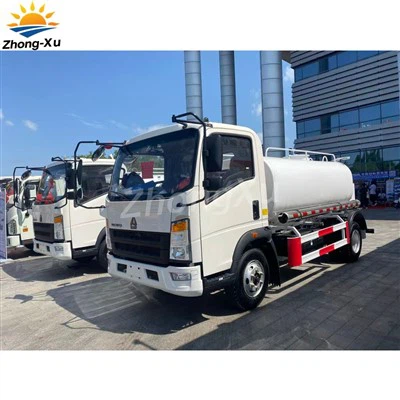
First off, let’s get the basics straight: Shacman makes everything from light-duty box trucks to heavy-duty 6×4 dump trucks, and even semi-tractors for long-haul. Each of these has totally different specs, so their max speed changes too. Let’s start with the lightest models — think the Shacman L3000 light-duty trucks. These are the ones we sell a lot to local delivery companies, small hardware stores, and even moving companies that do local runs, not cross-country. What’s their top speed? Around 85 km/h (that’s about 53 mph) when they’re fully loaded, maybe a little higher if they’re empty, but most places don’t let you go that fast anyway. These trucks are built for reliability, not drag racing, so their engines are tuned for torque (that’s the pulling power) rather than top-end speed. Makes sense when you’re carrying 5 tons of lumber around city streets, right? You don’t need to zoom — you need to make that turn without tipping your load.
Then we move up to the medium-duty models, like the Shacman M3000. These are workhorses for mid-sized fleets, often used for regional hauling — like moving groceries from a distribution center to small towns, or delivering concrete blocks to job sites an hour or two away. Their max speed is a bit higher, around 95 km/h (about 59 mph) when loaded. Wait, but why not faster? A big part of this is safety and regulatory stuff. In most regions, heavy trucks have speed limiters built in, anyway. Let’s be real — you can’t just punch a truck up to 120 km/h on a highway and expect it to handle right. Heavier rigs have more momentum, longer stopping distances, and you need that extra time to react if a car cuts you off. Shacman engineers don’t just pull these numbers out of thin air — they test every model for stability at different speeds, and the speed limiters (which are standard on most Shacman trucks) keep you from going beyond a safe threshold. I’ve seen fleets that tried to “unlock” these limiters and ended up with worse fuel efficiency, more wear on the engine, and even safety recalls. Not worth it.
Now the big ones: heavy-duty Shacman trucks, like the F3000 and X3000 semi-tractors, plus the 8×4 dump trucks and concrete mixers. These are the workhorses for long-haul, cross-country, or heavy construction jobs. What’s their max speed? Let’s see — when they’re hauling a full trailer (like a 40-ton flatbed with steel, or a tanker full of fuel), their top safe speed is around 100 km/h (about 62 mph). But here’s a fun fact: when these trucks are empty, their top speed can actually get up to 110 km/h (around 68 mph). But again, no one uses that speed regularly. Why? First, most highways have truck speed limits — in many countries, trucks can’t go faster than 100 km/h, anyway. Second, when you’re hauling a full load, pushing for that extra 10 km/h uses way more fuel. As a supplier, I always tell my fleet customers that fuel costs are 30-40% of their annual operating expenses, so why throw money out the window by going faster than you need to? I had a customer last year who was trying to shave 2 hours off his cross-country runs, so he was pushing his X3000 semi to 110 km/h full load. After a month, he noticed his fuel bills were up 18%! That’s thousands of dollars a year — way more than he made from the extra 2 hours.
Wait, but let’s talk about why these max speeds aren’t the same as a car’s. Trucks are just way bigger and heavier. A typical Shacman heavy-duty truck can weigh 18 tons empty — that’s like 10 small cars! When you’re that heavy, aerodynamics matter a lot. If you go too fast, the wind resistance goes up exponentially. Double your speed, and wind resistance goes up four times. That means more strain on the engine, more wear on the brakes and tires, and way more risk of accidents if you have to stop suddenly. Shacman designs every truck with that in mind. They don’t build these to race — they build them to carry your load safely, efficiently, and reliably for hundreds of thousands of kilometers.
I should also mention that some specialized Shacman trucks, like the off-road models used in mining or forestry, have way lower max speeds. Those are built for rough terrain, not highways. A Shacman mining dump truck, for example, tops out at around 40 km/h (25 mph) because that’s all you need when you’re driving over rocky, uneven ground. If you tried to go faster, you’d flip, or damage the truck — simple as that. So when someone asks me about a specific Shacman model, my first question is always, “What are you using it for?” That’s how I give them the right number.
A lot of new buyers don’t realize that Shacman also has different engine options for the same model. For example, you can get a Shacman X3000 semi with a 375 horsepower engine, or a 420 horsepower engine. The 420 one can hit a slightly higher top speed, but again, it’s not a big difference. The trade-off is that the 420 uses a bit more fuel. So if you’re doing long-haul, the 375 is usually enough — and saves you money on gas. If you’re pulling super heavy loads, the 420 is better, but you don’t need to go faster.
Another thing I see a lot is people mixing up “max speed” with “legal speed.” Just because a truck can go 110 km/h empty doesn’t mean you can drive it that fast on public roads. Almost every country has laws limiting commercial truck speeds. In the EU, for example, trucks can’t go faster than 90 km/h on motorways. In the US, it’s usually 65-75 mph (about 105-120 km/h) depending on the state, but many fleets voluntarily keep it lower to save fuel. Shacman trucks are programmed with speed limiters to match these regulations, so even if you wanted to go faster, the engine won’t let you. That’s not a flaw — it’s a safety feature. I’ve had drivers tell me those limiters saved them from getting a speeding ticket, or from blowing out a tire going too fast.
Now, let’s be real — I’m a supplier, so I don’t just tell you specs, I’m here to help you find the right truck for your needs. If you’re a small business owner looking for a local delivery truck, the L3000 is perfect, and its max speed is exactly what you need for city driving. If you’re a construction manager needing dump trucks for job sites, the M3000 is reliable and has the right speed for both local runs and site access. If you’re a long-haul fleet, the X3000 gets great fuel economy at 90-100 km/h, which is where you want to be.
I’ve been in this industry long enough to know that buying a truck isn’t just about speed. It’s about durability, fuel efficiency, resale value, and parts availability. Shacman is one of the most popular brands because they check all those boxes. Their trucks are built to work hard, day in and day out, without breaking down. I’ve had customers who’ve had their Shacman trucks for 10 years, with over a million kilometers on them, and they’re still going strong. That’s the kind of value you don’t get from a brand that’s only focused on top speed.
Wait, let me answer a common follow-up question: Can you make a Shacman truck go faster than the factory specs? Technically, yes — some mechanics can tweak the engine’s ECU, adjust the speed limiter, or change the gearing. But I never recommend that. First, it’s usually against warranty terms, so if something breaks, Shacman won’t cover it. Second, it’s unsafe. Faster speeds mean longer stopping distances, more risk of accidents, and higher wear on the truck. Third, it costs you more money in fuel and maintenance. I’ve seen a customer spend $2,000 to unlock their truck’s speed limiter, only to end up spending $5,000 extra a year on fuel and repairs. It’s not worth it.
So to wrap this up: There’s no single “max speed” for all Shacman trucks. It depends on the model, the engine, how loaded it is, and what it’s used for. Light-duty models top out around 85 km/h, medium-duty around 95 km/h, heavy-duty highway models around 100 km/h loaded, 110 km/h empty, and off-road models way lower. All of these speeds are tuned for safety, efficiency, and reliability — exactly what you want in a work truck.

If you’re in the market for a Shacman truck, whether it’s your first one or you’re adding to your fleet, I’m here to help. I can walk you through the different models, explain the specs, and find the one that fits your budget and your needs. Don’t waste time guessing — reach out to chat about your requirements, and I’ll give you all the details you need to make a smart purchase.
Truck References
- Shacman Official Product Specifications, 2023
- Commercial Vehicle Safety Alliance, Heavy-Duty Truck Speed Limiter Regulations, 2022
- International Journal of Heavy Vehicle Systems, Aerodynamic Effects on Truck Speed and Fuel Efficiency, 2021
- Shacman Fleet Operation Customer Case Studies, 2020-2023
Liangshan Zhongxu Automobile Trading Co., Ltd.
As one of the leading shacman truck manufacturers and suppliers in China, we provide high quality modern transport vehicle with competitive price. Welcome to buy high-grade shacman truck for sale here from our factory. If you have any enquiry about quotation, please feel free to email us.
Address: Feichi Automobile Industrial Park, No.1 Jiangjie Road, Liangshan County, Shandong Province, China.
E-mail: 95340278@qq.com
WebSite: https://www.zhongxu-auto.com/
