Hey there! I’m a supplier of colorants, and today I wanna chat about how these nifty little substances work at the molecular level. It’s a super interesting topic, and understanding it can help you make better choices when it comes to using colorants in your projects. Colorants
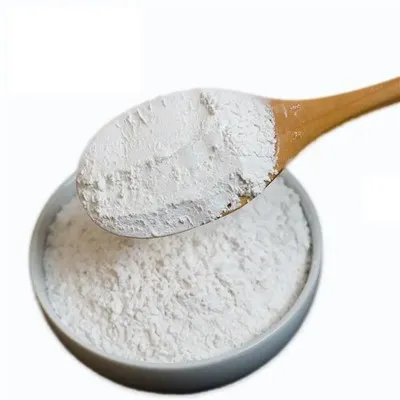
Let’s start with the basics. Colorants are substances that can change the color of other materials. They come in all sorts of forms, like dyes and pigments. Dyes are usually soluble in the medium they’re used in, while pigments are insoluble. But how do they actually create color?
Well, it all boils down to the way molecules interact with light. You see, light is made up of different wavelengths, and each wavelength corresponds to a different color. When light hits a molecule, it can either be absorbed, reflected, or transmitted. The color we see is the result of the wavelengths that are reflected back to our eyes.
For colorants, the key is to have molecules that can absorb certain wavelengths of light and reflect others. This is where the concept of chromophores comes in. Chromophores are parts of a molecule that are responsible for its color. They have specific electronic structures that allow them to absorb light in the visible spectrum.
Let’s take a look at an example. A common dye called methylene blue has a chromophore that absorbs light in the red and green regions of the spectrum. This means that it reflects blue light, which is why we see it as blue. The absorption of light by the chromophore causes the electrons in the molecule to jump to higher energy levels. When these electrons return to their original levels, they release energy in the form of light, which is what we perceive as color.
Pigments work in a similar way, but since they’re insoluble, they form tiny particles in the medium. These particles scatter and absorb light, creating the color we see. The size and shape of the pigment particles can also affect the color and properties of the final product. For instance, smaller particles tend to give a more intense color, while larger particles can provide better coverage.
Another important factor in how colorants work is the interaction with the medium they’re used in. The medium can affect the way the colorant molecules interact with light. For example, in a polar solvent, the colorant molecules may be more soluble and may interact differently with light compared to a non – polar solvent. This can lead to changes in the color and intensity of the colorant.
Now, let’s talk about how we can control the color of colorants at the molecular level. Chemists can modify the structure of the chromophore to change the wavelengths of light that are absorbed. By adding or removing certain functional groups from the molecule, they can shift the absorption spectrum and create different colors. This is a really powerful tool in the development of new colorants.
We also need to consider the stability of colorants at the molecular level. Some colorants can be affected by factors like heat, light, and chemicals. For example, exposure to UV light can cause the chromophore to break down, leading to a loss of color. To address this, we can add stabilizers to the colorant formulation. These stabilizers can protect the chromophore from degradation and ensure that the color remains vibrant over time.
As a colorant supplier, I know how important it is to provide high – quality products. That’s why we invest a lot of time and effort in understanding the molecular mechanisms of our colorants. We use advanced techniques like spectroscopy to analyze the absorption and emission properties of our colorants. This allows us to ensure that they meet the specific requirements of our customers.
Whether you’re working on a small art project or a large – scale industrial application, the right colorant can make a huge difference. Our colorants are carefully formulated to provide consistent color, good stability, and excellent performance. We offer a wide range of colors and types of colorants, so you can find the perfect one for your needs.
If you’re interested in learning more about our colorants or have a specific project in mind, I’d love to have a chat with you. We can discuss your requirements, provide samples, and help you choose the best colorant for your application. Don’t hesitate to reach out and start a conversation about your colorant needs.
Maltodextrin References:
- “Principles of Color Chemistry” by Kurt Nassau
- “Colorants and Auxiliaries: Volume 1: Chemistry, Properties and Applications” edited by K. Hunger
Fudijia (Tianjin) Supply Chain Co., Ltd.
With abundant experience, we re one of the most professional colorants manufacturers and suppliers in China. We warmly welcome you to wholesale bulk high quality colorants made in China here from our factory. For more information, contact us now.
Address: 301-2-1C,Jin Bin Jie Zuo,No.98, Huanghai Road,TEDA, Tianjin, China
E-mail: foodchem@hjlfoods.com
WebSite: https://www.ifoodchem.com/
