Hey there! I’m a supplier of network data cables, and today I wanna take you on a little journey to explore how these cables work. You know, in our digital age, network data cables are like the unsung heroes of the internet world. They silently transfer tons of data every second, keeping us connected to the vast digital landscape. Network Data Cable

Let’s start with the basics. A network data cable is a physical medium that allows computers and other devices to communicate with each other. There are different types of network data cables out there, but the most common ones are Ethernet cables. These cables are used in homes, offices, data centers, and pretty much anywhere you need a reliable network connection.
So, how do they actually work? Well, it all comes down to the way data is transmitted through the cable. Inside an Ethernet cable, there are usually four pairs of copper wires. These wires are twisted together in pairs, and this twisting is not just for show. It’s a clever design that helps reduce electromagnetic interference (EMI). EMI can be caused by things like power lines, motors, or even other cables nearby. By twisting the wires, the interference affects both wires in a pair equally, and the receiving end can cancel it out, making the signal clearer.
Data is sent through these copper wires in the form of electrical signals. When you click on a link on your computer or send an email, your computer converts the data into a series of electrical pulses. These pulses travel through the cable at an incredibly high speed, almost as fast as the speed of light. The receiving device, like a router or another computer, then converts these electrical pulses back into data that it can understand.
Now, there are different categories of Ethernet cables, and each category has its own speed and bandwidth capabilities. For example, Cat5e cables are pretty common and can support speeds of up to 1 Gigabit per second (Gbps). They’re great for home networks and small offices where you need a reliable connection for things like streaming video, browsing the web, or using Wi-Fi routers.
If you need even faster speeds, you might want to look at Cat6 or Cat6a cables. Cat6 cables can support speeds of up to 10 Gbps over a distance of up to 100 meters. Cat6a cables are even better, with the ability to handle 10 Gbps speeds over longer distances, up to 100 meters as well, and they also have better shielding to reduce interference.
Another important aspect of how network data cables work is the connectors. The most common connector used for Ethernet cables is the RJ-45 connector. It looks a bit like a large phone jack, but it’s designed specifically for network connections. When you plug an Ethernet cable into a device, the pins in the RJ-45 connector make contact with the corresponding pins on the device’s network interface card (NIC). This allows the electrical signals to flow between the cable and the device.
Proper installation of network data cables is crucial. If the cables are not installed correctly, it can lead to a lot of problems, like slow speeds, intermittent connections, or even complete network failures. For example, if the cables are bent too much or pulled too tight, it can damage the wires inside and cause signal loss. That’s why it’s always a good idea to have a professional install your network cables, especially if you’re setting up a large network.
In addition to copper cables, there are also fiber optic network data cables. These cables use thin strands of glass or plastic to transmit data in the form of light signals. Fiber optic cables have some major advantages over copper cables. They can transmit data over much longer distances without any significant loss of signal. They also have a much higher bandwidth, which means they can handle a massive amount of data at very high speeds. For example, fiber optic cables are used in long-distance telecommunications networks and in data centers where high-speed, high-capacity connections are essential.
However, fiber optic cables are also more expensive and more difficult to install than copper cables. They require special equipment to terminate and splice the fibers, and they’re more fragile, so they need to be handled with care.
As a network data cable supplier, I know how important it is to provide high-quality cables. That’s why we source our materials from trusted manufacturers and test every cable before sending it out to our customers. We want to make sure that you’re getting a reliable product that will perform well in your network.
Whether you’re setting up a home network, upgrading your office network, or building a large data center, we’ve got the right network data cables for you. Our cables are available in different lengths, categories, and types, so you can choose the ones that best suit your needs.
If you’re interested in learning more about our network data cables or if you have any questions, don’t hesitate to reach out. We’re here to help you find the perfect solution for your network. Whether you’re a small business owner looking for a simple Ethernet cable or a large corporation in need of high-speed fiber optic cables, we can work with you to meet your requirements.
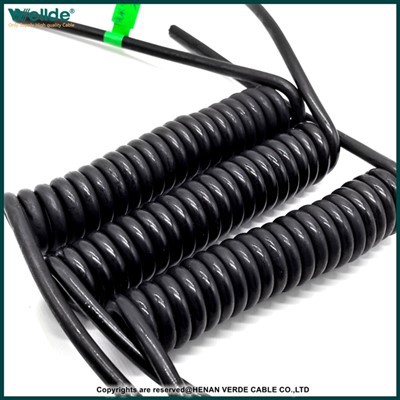
So, if you’re in the market for network data cables, give us a shout. We’re eager to assist you in selecting the right cables and making sure your network runs smoothly. Start a conversation with us, and let’s get your network connected at the best speed and reliability possible.
Elevator Cable References
- Networking All-in-One For Dummies by Doug Lowe
- Cisco CCNA Routing and Switching ICND1 100-105 Official Cert Guide by Wendell Odom
Henan Verde Cable Co., Ltd.
Henan Verde Cable Co., Ltd. is well-known as one of the leading network data cable manufacturers and suppliers in China. Please feel free to wholesale high quality network data cable in stock here from our factory. All products are with high quality and competitive price. Contact us for price list.
Address: Rm 1508, Kaixuanmen Building B#, No.238 Tongbai South Road, Zhengzhou City, Henan Province, China. 450006
E-mail: linda@welldecable.com
WebSite: https://www.welldecable.com/
