If you’ve worked with polyethylene (PE) pipe systems for water supply, gas distribution, or industrial piping, you’ve likely come across PE buttfusion fittings. As a supplier who’s spent 12 years in the industry, I hear the same question at least once a week: “Can these fittings actually be recycled, or do they end up in landfills once their job is done?” It’s a fair question—especially as sustainability moves from a buzzword to a non-negotiable for contractors, municipalities, and facility managers alike. Let’s break this down, straight from the perspective of someone who sells these fittings every day and lives with the daily realities of the industry. PE Buttfusion Fittings
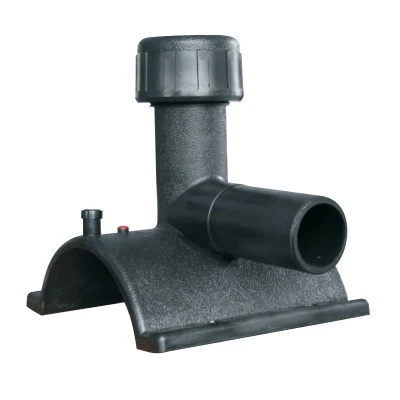
First, let’s get clear on what PE buttfusion fittings are. Unlike slip-on fittings that slide over pipe ends and are glued, buttfusion fittings are manufactured with machined flat ends that are heated, pressed, and fused directly to matching PE pipe ends in a process called butt welding. That fusion creates a seamless, leak-proof joint that’s as strong (if not stronger) than the pipe itself—why they’re the go-to for high-pressure applications like natural gas lines or municipal water mains. Most of these fittings are made from high-density polyethylene (HDPE, also called PE 100 or PE 80), a durable, thermoplastic material. That “thermoplastic” label is key here: thermoplastics melt when heated, harden when cooled, and can go through that cycle multiple times (with some caveats) without losing their base molecular structure. That’s the foundation for recyclability, but it’s not as simple as tossing a fitting in your curbside bin.
Let’s start with the good news: PE buttfusion fittings are 100% recyclable, technically. The same resin that makes the fittings durable for 50+ years is exactly what makes them recoverable. I’ve seen contractors pull out old, removed fittings from decommissioned gas lines, grind them down, melt them, and extrude them into new PE pipe or even new fittings. Some specialized recycling programs will even take scrap fittings generated on job sites—offcuts from cutting fittings to size, failed welds, unused stock—that would otherwise get thrown away. Those scraps, often called “prompt industrial scrap,” are the easiest to recycle because they’re clean, unadulterated PE with no contaminants. I regularly send my excess scrap stock to local recyclers that specialize in thermoplastics, and they turn it into a raw material for everything from playground equipment to new irrigation pipe.
But here’s the catch most people don’t talk about: not all recyclers accept PE buttfusion fittings, and not all fittings are created equal when it comes to reprocessing. First, contamination is a huge issue. If a fitting has been exposed to dirt, chemicals, oil, or other non-PE materials (like rubber gaskets from some older fittings, metal inserts, or even paint from job site storage), that ruins its recyclability. Thermoplastics can only be recycled if they’re relatively pure, because even small amounts of other materials disrupt the melting and molding process. I once had a customer send me a bag of old fittings that had been stored in a yard with no cover—they were covered in dirt and mildew, and the recycler turned them away because the contamination would have cost too much to clean.
Another factor is the type of PE resin. Most buttfusion fittings are PE 100, a high-performance resin designed for high-pressure applications. PE 100 can be recycled, but it has a higher quality standard than lower-grade PE resins, like LDPE (low-density polyethylene) used for plastic bags. Recyclers often sort resins by type, so a PE 100 fitting won’t get mixed with LDPE scrap, which would make the final product weak and unusable. Some smaller curbside recycling programs don’t have the equipment to sort PE resins, which is why you can’t just toss a fitting in your home bin. That’s why job site recycling works better—contractors can separate PE scrap from other waste, making it easy for specialized recyclers to process.
Then there’s the question of post-consumer recycled (PCR) content. Can recycled PE buttfusion fittings actually be made into new fittings? The short answer is yes, but there’s a limit to how many times you can recycle PE before its quality drops. Every time thermoplastic is melted and remolded, its molecular chains shorten a little, which reduces its strength and durability. PE 100, which is formulated to have long, strong molecular chains, can be recycled 1-2 times before it’s too degraded for high-pressure applications like gas lines. It can still be used for low-pressure products, like landscape edging or flower pots, but not for critical piping. That means if you recycle an old PE 100 buttfusion fitting, it might become a new pipe, which in turn could become a bench, and then after that, it might end up in a landfill. It’s a closed loop, but not infinitely closed—at least with current recycling technology.
I’ve also seen a common misconception that buttfusion fittings are too big or bulky to recycle. While it’s true that a 12-inch elbow or tee takes up more space than a small plastic bottle, recycling companies have industrial grinders that can handle pieces up to several feet in size. I’ve watched my local recycler feed a 24-inch buttfusion tee into a grinder and turn it into a pile of small, uniform PE granules in minutes. The key is that they have the equipment to process large pieces, which most small curbside programs don’t. That’s why partnering with a PE-specific recycler is the way to go for large quantities of fittings, not curbside pickup.
Now, let’s talk about what’s changing for the better. Over the last five years, more municipalities and industrial facilities are mandating that PE piping and fittings be recycled instead of landfilled. I work with a regional water authority that requires all contractors working on their projects to send their PE scrap to a certified recycler, and they even get a credit for doing so. Some of the major pipe and fitting manufacturers, including those I partner with, are developing “design for recycling” practices for buttfusion fittings. That means they’re reducing the number of additives in the resin, eliminating metal inserts, and making fittings easier to separate from contaminants. For example, a few of my newer product lines have no metal parts, just pure PE, which makes them 30% easier to recycle, according to the recyclers I work with.
But there’s still a lot of work to do. The biggest barrier right now is awareness. A lot of contractors and facility managers still don’t know that PE buttfusion fittings can be recycled, so they just throw them away. I’ve had customers tell me they didn’t even consider recycling old fittings because they thought they were made of something that couldn’t be reused. That’s why I make it a point to talk about recyclability with every client. When a customer orders a 6-inch buttfusion tee, I include a note with the delivery explaining that unused, clean fittings or scrap offcuts can be sent to a local recycler, and I even share the contact info for the recyclers I work with regularly. I’ve heard from customers that this small tip helped them cut their waste from PE materials by 40% last year.
Another barrier is cost. Recycling isn’t always free, and for small quantities of fittings, it might not be worth the effort to haul them to a recycler. But for larger projects—where a contractor might have 50 or 100 old fittings to dispose of—the cost of recycling is often cheaper than landfill fees. Landfill rates have gone up 25% in my area over the last three years, while recycling fees have stayed relatively stable. I’ve had a customer tell me that recycling their 200 fittings saved them $1,200 in landfill costs last quarter. That’s a big incentive, and it’s pushing more companies to look for recycling options.
So, to circle back to the original question: Can PE buttfusion fittings be recycled? Yes, absolutely—but it depends on how you do it. They’re not as easy to recycle as a plastic water bottle, but they’re far more recyclable than materials like cast iron or PVC, which are often landfilled because recycling is more complicated. The key steps are: separate PE fittings from contaminants, work with a recycler that specializes in thermoplastics, and if you’re a contractor or facility manager, ask your supplier for guidance on local recycling programs.
As a supplier, I’m invested in this. I don’t just sell fittings—I want to help my clients be more sustainable. That’s why I offer support for recycling, from sharing recycler contacts to advising on how to handle scrap fittings on job sites. If you’re working on a project that involves PE buttfusion fittings, or if you have excess fittings you need to dispose of, reach out to our team to discuss recycling options and connect with local providers that can handle your materials. We’re here to help you make the most of every product, from delivery to end-of-life.
PE Steel Transition Fittings References
- American Chemistry Council. (2022). Thermoplastic Recycling Guidelines for Polyethylene.
- Plastics Industry Association. (2021). PE Pipe and Fittings Recyclability Report.
- National Association of Water Companies. (2023). Sustainable Practices for Municipal PE Piping Systems.
- European Plastics Converters. (2022). End-of-Life Management for Polyethylene Buttfusion Fittings.
Zhejiang Shengbo Pipe Fittings & Valves Industry Co., Ltd.
With abundant experience, we are one of the most professional pe buttfusion fittings manufacturers and suppliers in China. Please feel free to buy discount pe buttfusion fittings from our factory. Welcome to contact us for quotation and free sample.
Address: No. 79 Hemudu North Road, Hemudu Town, Yuyao City, Ningbo City, Zhejiang Province, China
E-mail: shengbo@zj-shengbo.com
WebSite: https://www.shengbofitting.com/
