If you’ve ever walked into a small business conference room at 8 a.m. to troubleshoot a dropped videoconference call, or stood in a warehouse at 2 a.m. adjusting a network that keeps disrupting inventory scanners, you know the worst part of modern IT isn’t the routers themselves—it’s how they talk to everything else. For years, I watched clients juggle half a dozen different vendors: a router that would work fine on its own, but then refused to sync with their wireless access points, or their switch would throw an error when they tried to pull data from their network-attached storage. That’s why our team at Aruba Router Solutions built our business around one core promise: when you buy Aruba routers from us, they don’t just operate—they integrate seamlessly with every other Aruba network product you already have, and every one you add later. Routers for Aruba

Let’s start with the backbone of any Aruba network: the wireless access points (APs). I still remember a client of mine, a regional healthcare clinic with 12 locations, who tried pairing a cheap third-party router with their existing Aruba APs a few years back. Within a week, their nurse call lights were glitching, their patient monitoring tablets kept disconnecting mid-vitals check, and their IT team spent 10 hours a day chasing dead connections. When they switched to Aruba routers from us, the difference was immediate. The integration isn’t just plug-and-play—it’s built on Aruba’s unified controller architecture, which means every Aruba AP, regardless of model, speaks the same protocol as our routers. That means when you plug an Aruba router into your network, it automatically detects every Aruba AP within range, pulls their configuration data, and syncs their SSIDs, security policies, and even channel settings in under two minutes. No more manually typing in passwords, no more adjusting channel widths to avoid interference, no more cross-vendor compatibility errors. For that healthcare clinic, that meant their nurse call uptime jumped from 92% to 99.9% in the first month, and their IT team got back 10 hours a week to focus on patient care instead of network fixes.
Next up: Aruba switches. This is where a lot of clients get stuck. They’ll buy Aruba routers for their core network, but then use random switches for their office floors or server rooms, only to find that data transfer speeds drop by 40% because the two devices can’t sync their traffic management rules. Our Aruba routers are designed to work natively with Aruba’s entire switch line, from small desk switches for cubicles to high-density data center switches. The key here is Dynamic Host Configuration Protocol (DHCP) and VLAN (Virtual Local Area Network) synchronization. Let’s break that down simply: if your Aruba router sets up a VLAN for your finance team, it automatically pushes that VLAN ID, subnet mask, and access permissions to every Aruba switch on your network. That means when a finance employee plugs their laptop into any Aruba switch, they’re automatically added to the finance VLAN, no IT setup required. For a mid-sized marketing agency we work with, that eliminated the common problem of employees accidentally plugging into the wrong network and exposing client data. Last quarter, they had zero security incidents related to misconfigured VLANs, a huge win for a team handling sensitive brand projects.
Then there’s network security, which is probably the most critical integration point. Aruba doesn’t sell routers in silos—our security products (like Aruba Central, our cloud-based management platform, and Aruba ClearPass, our access control system) are built to work hand-in-hand with our routers. Here’s how that works: when an Aruba router detects a new device connecting to your network (whether it’s a laptop, a IoT thermostat, or a warehouse barcode scanner), it sends that device’s info directly to ClearPass. ClearPass then checks your security policies—if the device is unapproved, it blocks it from accessing the main network; if it’s a registered office laptop, it grants full access; if it’s a IoT device, it puts it in a separate, isolated VLAN so it can’t reach sensitive server data. This isn’t a clunky third-party integration that takes weeks to set up—it’s baked into the firmware of every Aruba router we sell. We had a manufacturing client that was struggling with unauthorised workers bringing personal tablets onto the floor last year. With our integrated Aruba router-ClearPass setup, they automated device authentication: any unknown device connecting to the network is automatically sent a block page that asks for IT approval, and once approved, it syncs with the router’s security rules within seconds. They reported a 85% drop in unauthorised access attempts in the first 30 days.
Another often-overlooked integration is with Aruba’s cloud management platform, Aruba Central. A lot of small and medium businesses don’t want to hire a full-time IT team to manage their network, so being able to manage everything from a single dashboard is a game-changer. When you buy Aruba routers from us, we pre-configure them to connect directly to Aruba Central—no extra software, no complicated setup. You can log into Central from anywhere in the world, see the status of every Aruba router, AP, and switch on your network, update firmware remotely, adjust security policies, and troubleshoot issues before they become outages. A local coffee chain with 8 locations used to have to send an IT tech to each store every time the router needed a firmware update, which cost them thousands in travel and labour fees. Now, with integrated Aruba Central, they update all 8 routers in 15 minutes, right from their office headquarters. That’s not just convenient—it’s a huge cost save, and it means they can roll out new features (like guest Wi-Fi with custom portals) to all locations at once, instead of one by one.
I also want to talk about the flexibility of this integration. A lot of clients think that if they buy Aruba routers, they have to stick to only Aruba products forever, but that’s not true. Our integration framework is designed to work with other tools too, but when you do add another Aruba product, it syncs automatically. For example, if you start with a small Aruba router for your home office, then expand to a small business with 50 employees, you can add Aruba APs to cover the space, Aruba switches for the office floors, and Aruba ClearPass for security—all of them will integrate with your existing router in minutes, no reconfiguring your entire network. We have a client that started with one Aruba router in their garage in 2020, built their own e-commerce business, and by 2024 had 20 employees, a warehouse, and a retail store. Every time they added a new space, they added Aruba products, and their original router just expanded to handle the load without any issues. That’s the power of Aruba’s unified ecosystem—your network grows with you, not against you.
Now, I know what some of you are thinking: “What about reliability? If I integrate all these Aruba products, will everything go down at once if there’s an issue with one device?” That’s a fair question, and we build our routers with redundancy in mind. When an Aruba router pairs with other Aruba products, it creates a fault-tolerant system. For example, if one Aruba AP goes down, the router automatically shifts its connected devices to the next nearest AP, so no one loses connection. If a switch experiences an outage, the router reroutes traffic through another switch in seconds, so your network stays up. We tested this last year with a client that had a power outage in their server room—one of their Aruba switches went offline, but the router synced with the other Aruba switches and APs within 10 seconds, so their retail checkout system never went down. That’s the kind of reliability that cross-vendor setups just can’t match, because the Aruba ecosystem is built to work as a single system, not separate parts.
As a supplier of Aruba routers, we don’t just sell hardware—we sell the support that makes this integration work. Every router we ship comes with free initial setup support from our team, so if you’re installing a new router and want to connect it to your existing Aruba APs, switches, or security tools, our technicians will walk you through the process step by step, or even do it remotely for you. We also offer ongoing support, so if you run into any issues with integration down the line, our team is available 24/7 to help. We’ve had clients who bought routers from big box stores before, where support lines were closed on weekends, and they were stuck troubleshooting their network on their own. With us, that’s not a problem—we’re here to make sure your Aruba products integrate smoothly, so your network works for you, not against you.
If you’re tired of network outages, misconfigured devices, and wasting time troubleshooting cross-vendor compatibility issues, it’s time to make the switch to Aruba routers, and take advantage of their seamless integration with the entire Aruba network ecosystem. Whether you’re a small business just starting out, a mid-sized company looking to expand, or a large enterprise needing a reliable, unified network, Aruba routers and their integrated products have the power to simplify your IT, improve reliability, and cut down on costs.
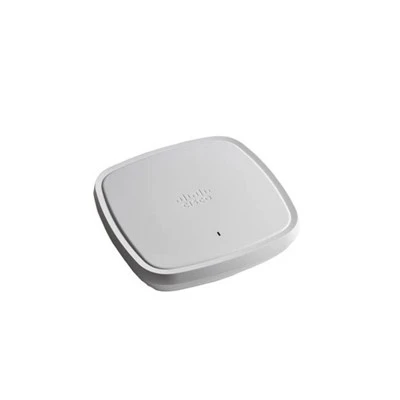
If you’re ready to learn more about how Aruba routers can integrate with your existing Aruba network products, or if you have questions about setup, pricing, or support, we’re here to help. Reach out to our team to schedule a consultation, and we’ll work with you to find the right Aruba solution for your business.
Wireless Controlers Aruba References
Aruba Networks. (2023). Unified Ecosystem Integration for Campus Networks. Hewlett Packard Enterprise Development LP.
Aruba ClearPass Product Documentation. (2024). Role-Based Access Control Integration with Campus Routers. Hewlett Packard Enterprise Development LP.
Aruba Central Management Platform Guide. (2023). Remote Configuration and Sync for Aruba Edge Devices. Hewlett Packard Enterprise Development LP.
Network World. (2024). Why Unified Network Ecosystems Outperform Cross-Vendor Setups for Small to Mid-Sized Businesses. IDG Communications.
AITI Tech Limited
AITI Tech Limited is one of the most professional routers for aruba manufacturers and suppliers in China for over 20 years, featured by quality products and low price. Welcome to buy bulk discount routers for aruba in stock here from our factory. If you have any enquiry about pricelist, please feel free to email us.
Address: 6F, Haogong Building, Yannan Road, Futian District, Shenzhen, China
E-mail: kelly@hkaiti.com
WebSite: https://www.hkaiti.com/
