Hey everyone, I’m Jake, and for the last 8 years, I’ve been running my own small forging part machining shop—let’s be real, most folks in this space just call it “forging machining” to keep it simple. I talk to new clients all the time, and one question that keeps popping up is: “Wait, after you forge the part, what surface finish do I actually need once machining is done?” It sounds straightforward, but skip this step, and you’re looking at parts that fail, cost you way more down the line, or even get rejected at the last minute. I’ve seen it happen too many times—last year, a local farm equipment builder sent a part back because the finish was too rough, and they had to rush a replacement, losing a week of production. That’s the kind of headache I want to help you avoid, so let’s break this down like we’re chatting over a coffee (no stuffy engineering jargon, promise). Forging Part Machining
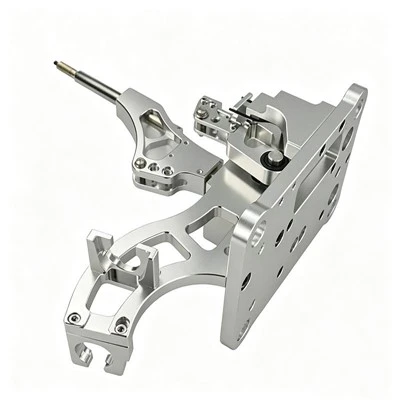
First, let’s get a quick baseline: forging parts start hot, right? You heat metal (steel, aluminum, brass, whatever) and hammer it into shape, which leaves a slightly uneven, scale-covered surface. Machining is the step where we cut that down to your exact specs—drilling holes, facing edges, smoothing surfaces. The “surface finish” is just how smooth those machined surfaces are, measured in Ra (that’s microinches, for anyone new to the term) or Rz, which is a total depth of roughness peaks. I don’t always care to explain the difference unless a client asks, but the key is: lower Ra = way smoother surface.
Now, the requirements aren’t one-size-fits-all. That’s the big mistake a lot of new people make—they think “smoother is better” and blow their budget on grinding when a milder finish would work. Let’s walk through the most common industries I deal with, because that’s where the actual requirements live.
Take automotive parts, for example. I work with a couple of small EV startup teams these days, and their motor brackets are non-negotiable. For those, we shoot for 16 Ra to 32 Ra. Why? The bracket sits against the motor housing, so if the finish is too rough (anything over 32 Ra), there are tiny gaps between the two parts. That lets in dirt and moisture, which can corrode the metal over time—bad news for a $10k motor. Also, if you’re machining a brake caliper mount? We crank it up to 8 Ra to 16 Ra. Brake fluid is corrosive, and a rough finish would make the seal around the caliper wear out 2x faster. I’ve had a client argue that 16 Ra was enough for brakes, only to have a test part leak fluid. Trust me, when it comes to safety parts, don’t cut corners here.
Then there’s farm equipment. My go-to here is plow blades and axle hubs. Those get beat up by dirt, mud, and rock dust every single day, so you don’t want a super smooth finish—wait, hear me out. A 63 Ra finish is perfect here. A smoother surface would actually hold more dirt, which grinds away at the metal faster. It’s like a tire tread: you want a little texture to grip, not be slick. If I put a 16 Ra finish on a plow blade, it’d wear through in a season instead of 3–4 years. That’s why farm guys are usually the cheapest to work with on finishes, but they’re also the most consistent about telling me exactly what their machine needs—no guesswork there.
Hydraulic parts are another big one, and these have the strictest rules I’ve seen. Cylinders, valves, and hose fittings—all of these need super tight finishes. A hydraulic cylinder’s inner wall, for example, has to be 4 Ra to 8 Ra. If it’s any rougher, the piston seal will snag on those tiny peaks, cause leaks, and lose pressure. Last month, I got a rush order for a hydraulic manifold, and the client specified 2 Ra for the mating surfaces. I didn’t even question it—they know their systems, and those tiny manifolds don’t have room for error. Mess up that finish, and the entire line shuts down, costing them thousands an hour.
Okay, so how do we actually achieve that finish? That’s where the forging machining experience comes in. It’s not just flipping a switch on the CNC machine. For rough machining (taking off big chunks of leftover forging scale), we use a faster feed rate and a coarser tool—we don’t need smoothness here, we need speed. Then, for finish passes, we slow the spindle way down, use a sharper tool, and even run a deburring wheel over edges to get rid of those sharp burrs that come from cutting. For super smooth finishes, we might add a honing step, which is like sanding the surface with tiny abrasive stones. I once worked with a aerospace client who needed a 1 Ra finish on a turbine blade mount—we had to do three finish passes, each with a finer tool, and even used a lapping compound to get it right. That’s the kind of detail that makes a part work, but you only need it for the right applications.
Wait, let’s talk about mistakes I see people make all the time. First, mixing up the forging finish with the machined finish. A lot of new clients come to me saying, “Just machine it smooth, like a mirror.” But a mirror finish (under 1 Ra) is almost never needed unless it’s for something decorative, like a custom bike frame. That’s way more expensive, and it’s overkill for 90% of industrial parts. Second, not accounting for coating or plating. If you’re going to send the part out for powder coating or chrome plating, you need a slightly rougher finish—like 63 Ra. The coating needs those tiny peaks to stick to the metal; if it’s too smooth, the coating will chip off after a few uses. I learned that the hard way a few years back—did a batch of truck frames with 16 Ra, sent them for powder coating, and half of the finish peeled. Now I always ask: are you coating this? That changes the finish requirement entirely.
Third, forgetting about tolerance alignment. If your part has holes that need to line up with another component, a too-rough finish can mess with fit. For example, if you’re machining a gear hub that bolts to a transmission, a 63 Ra finish on the bolt holes might make the bolt sit unevenly, leading to vibration. So even if it’s not a “high-finish” part, you still need a consistent surface to keep tolerances tight.
Let’s also touch on quality checks. I don’t just run a part off the machine and send it—we use a surface roughness tester, which is a little pen that drags across the surface and measures the peaks. No guessing with the naked eye, because a human can’t tell the difference between 16 Ra and 32 Ra just by looking. I’ve had a client try to save money by skipping the tester, and they sent back a batch of parts that were way too rough. Now, all my orders come with a roughness test report, so you don’t have to worry about it.
Now, what about if you’re not sure what finish you need? That’s where chatting with a machinist who works with forgings comes in—someone who’s seen hundreds of parts. I’ve had clients say, “I don’t know, just make it work,” and I’ll ask them questions: what’s this part for? What’s it touching? Does it move, or is it stationary? Is it exposed to water or dirt? Those answers will tell me exactly what finish we need. For example, if it’s a stationary bracket that doesn’t see any harsh conditions, 32 Ra is totally fine. If it’s a moving part that seals against another component, 16 Ra or lower.
I want to wrap this up with something I always tell new clients: surface finish isn’t just a “nice to have”—it’s a make-or-break detail. Mess it up, and you’re looking at downtime, rejected parts, and extra costs that add up way more than getting the finish right the first time.
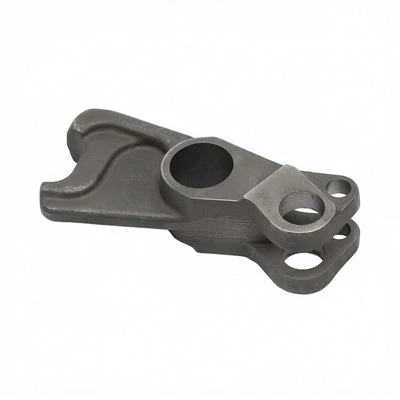
If you’re working on a forging part and need help figuring out the right surface finish, or if you just want to run a quote, feel free to reach out. I’m here to make this process simple, no fancy terms, just straight talk about what your part needs.
Iron Casting Machining References:
- Kalpakjian, S., & Schmid, S. R. (2020). Manufacturing Processes for Engineering Materials (7th ed.). Pearson.
- ASM International. (2018). Forging and Forming of Metals: Surface Finish and Dimensional Control. ASM Handbook, Vol. 14A.
- Machining Data Handbook. (2021). Surface Finish Requirements for Forged Part Machining. Manufacturing Engineers Association.
- DeGarmo, E. P., Black, J. T., & Kohser, R. A. (2022). Materials and Processes in Manufacturing (12th ed.). John Wiley & Sons.
Ningbo Yirui Machinery Manufacturing Co., Ltd.
As one of the most professional forging part machining manufacturers and suppliers in China, we’re featured by quality products and good price. Please rest assured to wholesale durable forging part machining made in China here from our factory. Customized orders are welcome.
Address: No.107, Wanzhong Village, Jishigang Town, Haishu District, Ningbo City
E-mail: James.he@yiruitek.com
WebSite: https://www.yiruime.com/
