If you’ve ever shipped heavy equipment—like excavators, bulldozers, or even full-size manufacturing machinery—chances are you’ve heard of a lowboy semi trailer. As a lowboy semi trailer supplier, I get asked this question all the time: what exactly are the dimensions of a standard one? It’s not just a random number game, either. Get the specs wrong, and you’re either stuck with cargo that’s too tall to clear overpasses, too long to fit on most roads, or worse, at risk of costly fines or even accidents. Lowboy Semi Trailer
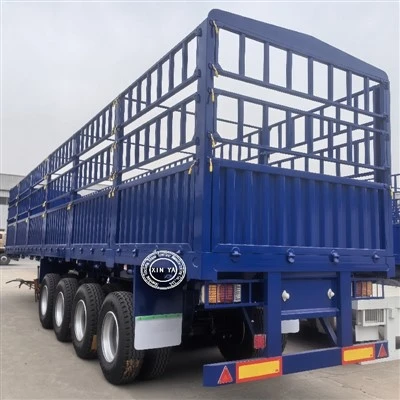
First, let’s cut through the jargon. A standard lowboy (sometimes called a lowbed or low-loader, depending on where you are) is designed specifically for heavy, oversized cargo that’s too tall to fit on a regular dry van or flatbed. The key here is the “low” part—its deck sits way closer to the ground than a standard trailer, which lowers the overall height of your load. That’s the whole point. But let’s get into the actual numbers, and I’ll break down which ones are standard, which are common exceptions, and what matters most for your shipment.
First: The Legal Limits That Actually Define “Standard”
Before I even talk about trailer specs, I need to mention the baseline: every country, every state, every province has its own size and weight laws. In the U.S., that’s Federal Highway Administration (FHWA) rules, paired with state-specific oversize load permits. In Canada, it’s the National Safety Code, with provincial add-ons. I’ve been in this game long enough to know that “standard” is a bit of a moving target, but there are universal benchmarks most reputable lowboy suppliers stick to for routine loads (no special permits required).
Deck Dimensions: The Heart of the Trailer
The lowboy’s main work area is the deck—where your cargo sits. For a standard fixed-gooseneck lowboy (the most common type for general heavy haul), the deck length is usually between 29 feet and 35 feet. Wait, why the range? It comes down to the gooseneck (the front part that hooks to the truck) and the rear extension, but let’s stick to the deck itself. The deck width? Almost always 8.5 feet (102 inches). That’s non-negotiable for North America—even if you’re hauling an excavator’s tracks or a compact machine, 8.5 feet is the sweet spot for fitting standard loads without exceeding width limits.
The big one people care about: deck height. A standard lowboy’s deck sits at 18 inches to 24 inches off the ground. Compare that to a flatbed, which is 48 inches high—you can see why this is a game-changer. If your cargo is 10 feet tall, a flatbed would push the total height (cargo + trailer deck) to 14 feet, which is way over the 13.6-foot (163-inch) FHWA maximum for non-permitted loads. A lowboy at 24 inches, though, brings that total to just 12.4 feet—perfect for avoiding overpass fines.
Overall Length: How Much Can You Haul?
Total trailer length (including gooseneck and the rear flip axle) is another common question. Standard fixed-gooseneck lowboys clock in at 48 feet to 53 feet total. Wait, 53 feet? That’s the same as a standard dry van. Yep—most North American roads and interstates allow 53-foot trailers without special permits, so suppliers build lowboys to match that for versatility. But don’t confuse overall length with usable deck length: the gooseneck sticks out 10 feet to 15 feet in front of the deck, and rear flip axles (used to distribute weight for heavy loads) add another 2 to 4 feet at the back, so you’re not losing that much usable space.
Wait, there’s also a detachable gooseneck lowboy, which is super popular for super long or bulky loads (like prefab building beams). Those are a bit different: their overall length is usually 53 feet too, but the deck length alone can be up to 48 feet (since you remove the gooseneck to load extremely long cargo). As a supplier, I always tell construction crews that detachable goosenecks are worth the extra cost if you’re hauling something longer than 30 feet, because you avoid the hassle of lifting loads over a fixed gooseneck.
Height Limits: The Fine Print That No One Tells You
Let’s talk overall height, because this is where most new shippers mess up. When you add the trailer’s height to your cargo’s height, you can’t exceed 13.6 feet (163 inches) in most U.S. states and Canada’s southern provinces. A standard lowboy’s total height (from ground to top of trailer rails, not including cargo) is only 13 feet max. That leaves you 6 inches of clearance for any cargo, which is why the deck height is so low.
Pro tip I learned the hard way: don’t forget to account for things like tall exhaust pipes, ladder racks on construction equipment, or even hydraulic hoses sticking up from an excavator bucket. Last year, a contractor client told me his 11-foot-tall bulldozer fit on a standard lowboy, but he forgot the dozer’s roll bar was 13.5 inches—we had to rent a temporary deck extension to lower the total height by 4 inches, otherwise he would’ve gotten a $1,000 fine in Oklahoma. That’s the kind of headache we help customers avoid every day.
Weight Capacity: What Makes a Lowboy a Lowboy?
It’s not just dimensions—weight is tied to it, too, because a lowboy has to carry heavy stuff. A standard 53-foot fixed-gooseneck lowboy has a weight capacity of 40,000 to 80,000 pounds, depending on the number of axles. Most standard ones are 3 axles (1 rear tandem, 1 front steering axle) rated at 60,000 pounds total. If you need more, we can add flip axles to hit 100,000 pounds, but that changes the length a bit. But to stay “standard,” 3 axles, 60,000 pounds is the sweet spot for most routine heavy haul.
Variations That Aren’t “Standard” (But You’ll See Them)
Just to be clear, I’m talking about the true standard that 90% of suppliers offer and 80% of customers need. There are exceptions, and you should know them. For example, a single-drop lowboy has two decks: a lower main deck and a higher front deck, so you can haul cargo that’s tall on the front end. Those have a shorter main deck (usually 20 feet) to keep height low. Then there’s a double-drop lowboy, which is even lower, but its deck is only 20 feet long—great for very short, super heavy loads like compressors, but not ideal for excavators that need a long space.
Also, if you’re in Europe, “standard lowboy” is a bit different. Their width is 2.55 meters (about 8.3 feet) instead of 8.5 feet, deck height around 1.1 meters (3.6 feet), and total length up to 13.6 meters (44.6 feet). But since most of my customers are in North America, that’s a side note—just something to mention if you’re shipping internationally.
Why These Dimensions Matter (Beyond Fines)
As a lowboy semi trailer supplier, I don’t just sell specs— I sell solutions. If you’re a small construction company hauling one excavator a week, a standard 53-foot lowboy with 35-foot deck is perfect. It fits your machine, works with your existing truck, doesn’t need a permit, and saves you money. If you’re a mining company hauling multiple pieces of equipment, you might need a longer deck or extra axles, but that’s not “standard.”
Last month, a first-time shipper emailed me asking if a standard lowboy would fit his 12-foot-tall backhoe. I calculated: lowboy deck height is 2 feet, backhoe is 12 feet, total is 14 feet—over the limit. Instead of him wasting money on a permit, I pointed him to our standard extended-deck lowboy, which had a 22-inch deck height, bringing the total to 13.2 feet, no permit needed. That’s the kind of small, specific advice that makes working with a good supplier way better than Googling generic “standard lowboy dimensions” and guessing.
Final Tip Before You Book
The last thing I’ll say: don’t just rely on “standard” numbers. Every trailer’s exact specs can vary a tiny bit between manufacturers, so always ask your supplier for the exact deck height, length, and overall height of the specific model they’re sending. And if you have a weirdly shaped or oversized load, tell them early—we can adjust (or point you to a specialized trailer) before you waste time and money on a shipment that doesn’t fit.

If you’re shopping for a lowboy semi trailer to buy, rent, or book for a shipment, don’t overcomplicate it. Stick to the standard benchmarks we talked about, but make sure you confirm what works for your load and your area’s legal limits. We’ve helped hundreds of shippers get this right, and we’d be happy to walk you through your specific needs. Reach out anytime to chat through dimensions, capacity, or anything else for your next heavy haul.
Van Box Semi Trailer References: American Trucking Associations, FHWA Office of Freight Management and Operations, Canadian Vehicle Manufacturers’ Association, NCCCO (National Commission for the Certification of Crane Operators) Heavy Equipment Transport Guidelines.
Shandong Yuncheng Xinya Trailer Manufacturing Co., Ltd.
Shandong Yuncheng Xinya Trailer Manufacturing Co., Ltd. is one of the most experienced lowboy semi trailer manufacturers and suppliers in China, featured by quality products and good service. Please rest assured to buy CE approved lowboy semi trailer from our factory. Contact us for customized service and OEM service.
Address: No. 008, Hexie Road, Yangzhuangji Town, Yuncheng County, Heze City, Shandong Province
E-mail: fiona@xinyatrailer.com
WebSite: https://www.china-truckfactory.com/
