If you’re running a 2 phase decanter centrifuge (I’m not gonna use the full name every time, just call it a decanter since we’re all on the same page here), you know vibration isn’t just an annoyance—it’s a red flag. Sure, a little shake when it’s cranking at 3,000 RPM might feel normal at first, but over time? It’ll wear out bearings, crack the bowl, and even shut down your whole process faster than you can refill the feed tank. I’ve been selling these things for 8 years now, and 9 out of 10 vibration issues I see with customers aren’t because the decanter’s junk—they’re because people skip the tiny, fixable steps that prevent this stuff before it becomes a huge problem. Let’s cut the fancy engineering jargon and talk about what actually works, no fluff, just stuff I’ve tested or watched my customers nail. 2 Phase Decanter Centrifuge
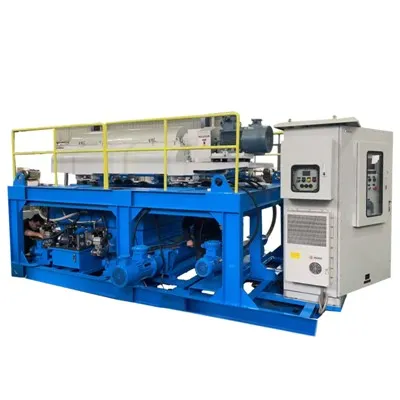
First off, let’s get one thing straight: vibration doesn’t pop up out of nowhere. It’s a symptom of something off. The most common cause? Bad balance. Wait, not just “the bowl is unbalanced” — I mean unbalanced load. Here’s how that happens. If you’re feeding your slurry unevenly—like, dumping all your wet biomass or oil-water mix to one side of the bowl instead of spreading it evenly across the pool—you’re gonna get wobble fast. I had a customer last month who kept calling saying his decanter was shaking so bad it moved 2 inches across the floor over 6 months. Turns out his feed pipe was clogged on one end, so half the bowl was dry and the other half was holding all the sludge. He fixed the clog, aligned the feed, and the vibration dropped to almost nothing in 20 minutes. Another big balance mistake? Not doing a dynamic balance check after any part change. If you replace the centrifuge bowl, the screw conveyor, or even the drive belt, you can’t just throw it on and go. Static balance checks (spinning it by hand to see if it stops level) aren’t enough—you need to run it at 70% of your normal operating speed, pause, check the vibration reading, then bump it up to full speed. Most people skip that, and boom, vibration by week two. Pro tip: I give every new customer a free balance check cheat sheet when they buy their decanter—all you need is a simple tachometer and a vibration sensor (you can grab a cheap one for $50 online, no need for lab gear).
Next up, alignment of the drive system. This is another big one that people ignore until it’s too late. The decanter’s motor connects to the gearbox, which connects to the bowl and screw conveyor. If those three parts aren’t perfectly aligned, they’re fighting each other every time the machine runs. Over time, that misalignment torques the shaft, wears out couplings, and creates vibration that gets worse and worse. How do you check? I don’t mess with laser alignment (that’s overkill for most small to mid-sized operations). Grab a straight edge or even a long level—hold it against the edge of the motor shaft and the gearbox shaft when they’re disconnected. If there’s a gap bigger than a credit card, they’re out of alignment. Adjust the motor mounts (most have adjustable feet) until it lines up. Do this every 3 months, or after moving the decanter—even a tiny shift during a move can throw things off. I had a customer in the food and beverage industry who moved his decanter to a new processing bay and skipped alignment. Within a week, the vibration was so bad he had to shut down production for 3 days to fix a broken coupling. Cost him $12k in lost product. A $20 level would’ve prevented that.
Wear and tear on parts is another silent vibration culprit. The screw conveyor in a 2 phase decanter is always scraping against the bowl—if there’s buildup on the conveyor flights, that adds extra weight unevenly, which throws off balance, or worse, the flights wear down so much that the conveyor starts to wobble inside the bowl. Same with the bearings. Most people don’t grease their decanter bearings regularly, or use the wrong type of grease. If bearings are dry, they create friction, which makes the whole unit vibrate. How often should you grease? Check the manual (and yes, read it—surprising how many guys skip that) but generally every 500 operating hours, or once a month if you run it 24/7. Use the grease we recommend (I include a free 1kg tub with every decanter sale) — cheap generic grease has additives that break down at high speeds and make bearings wear faster. And if you see any play in the shafts when the decanter’s off? That’s a sure sign bearings are bad, and replacing them before they cause vibration is way cheaper than fixing the damage they’ll do later.
Wait, let’s not forget about the base and floor. I’ve had customers tell me “my floor is concrete, it’s solid” — no, not all concrete is equal. If your decanter is sitting on a part of the floor that’s got uneven settling, or it’s not bolted down tight, the whole thing will bounce. I had a wastewater treatment customer a few years back who installed his decanter on the second floor of a building. The floor there wasn’t reinforced for heavy vibration, and even though he bolted it down, the floor flexed when the decanter ran. That created resonance—when the machine’s vibration frequency matches the floor’s natural frequency—and it turned a little shake into a full-on rattle that made the lights in the room flicker. How do you check for that? Run the decanter at low speed, put your hand on the floor next to it. If you feel more shake in the floor than on the decanter itself, you’ve got a resonance issue. Fix it by adding weight to the base (we sell custom steel counterweights for this exact thing) or reinforcing the floor around the decanter’s mount. Don’t skip this—resonance can not only mess up your decanter, it can damage the whole building over time.
Another mistake I see all the time is overloading the decanter. Everyone wants to run at max capacity to get the most product out, but too much feed, too fast, means the slurry is sloshing around inside the bowl instead of forming a smooth, even layer. That slosh creates dynamic vibration, and if you keep running it over capacity, you’ll end up with damaged seals, worn shafts, and way higher repair costs. What’s the right feed rate? Most decanters have a feed rate range—stick to that. If your feed is extra thick or extra thin, adjust the rate accordingly. For example, if you’re processing a slurry that’s 40% solids instead of the usual 20%, slow the feed down by 20% to keep the load even. I always tell customers: “Max capacity is for new machines, not for long-term reliability.” Run at 85% of your max, and your decanter will last 2-3 times longer, no vibration issues.
Wait, let’s talk about something a lot of people overlook: process parameters. The pool level in the decanter bowl has a huge impact on vibration. If the pool is too high, it increases drag on the screw conveyor, which makes the conveyor work harder and creates vibration. If it’s too low, you get excessive friction between the conveyor and the bowl wall, which also causes shake. The ideal pool level is usually around 30-50% of the bowl diameter—check your manual, but if you don’t have it, the rule of thumb is: the liquid discharge weirs (the little holes the oil/water comes out of) should be submerged so you have a steady flow, but not so deep that they’re pulling extra material. I had a customer in the chemical industry who kept raising the pool level to get more liquid output, and within a month his decanter was vibrating so bad the discharge pipes were leaking. Drop the pool level, the vibration stopped, and his liquid output was still on spec. Win-win.
And finally, regular inspections. I’m not talking about a full teardown every week—just a 10-minute check every day before you start the decanter. Look for cracks in the base, listen for weird noises (grinding, squealing, not just the normal low hum), check that all bolts are tight (vibration loosens bolts over time, which makes more vibration—circular problem, right?). Once a month, do a deep check: clean the conveyor flights of any buildup, inspect bearings for play, check the feed pipe for clogs. I have a customer who does a 10-minute pre-start check every day, and he’s had the same decanter for 7 years with zero major vibration issues. Another customer who skipped checks? Replaced bearings 3 times in 2 years, because he didn’t notice they were going bad until vibration was already at a critical level.
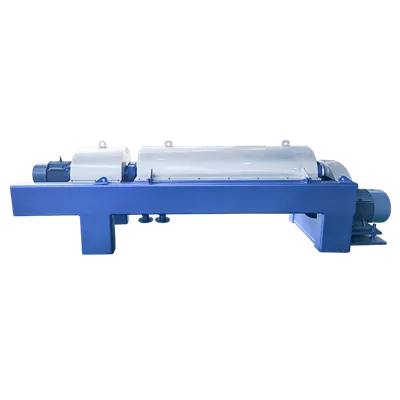
Let’s circle back to the thing I say to every customer: vibration is preventable. It’s not a flaw in your decanter, it’s a sign that something in your setup is off. If you’re dealing with shake that won’t go away, don’t just ignore it or try to force the machine to work. Most of the fixes here are simple—adjust alignment, clean buildup, check pool level, fix feed rate, do balance checks. None of them require a huge team or thousands of dollars in parts. If you’re trying to troubleshoot and you’re not sure what to do, reach out. I’ve seen every scenario, and I can help you figure out what’s causing the vibration in your specific setup. We don’t just sell decanters—we support them for their whole life, because at the end of the day, your success is my success. So if you’re looking to upgrade your 2 phase decanter, or if you’ve got a shaking machine that’s costing you time and money, get in touch to talk through your needs. No pressure, just real advice from someone who’s been in this for way too long to give you the generic, “follow the manual” garbage.
Decanter Centrifuge References
- Centrifugal Separation: Principles and Practice, K. E. Porter, 2012
- Maintenance Guidelines for Solid Bowl Decanter Centrifuges, International Society for Separation Science, 2019
- Vibration Analysis for Industrial Centrifuges, Machinery Lubrication Magazine, Vol. 17, No. 4, 2021
Lishui Yuanrong Environmental Protection Equipment Co., Ltd.
As one of the most professional 2 phase decanter centrifuge manufacturers and suppliers in China, we have world-leading production equipment and strong manufacturing capabilities. Please feel free to buy customized 2 phase decanter centrifuge from our factory. Also, quotation is available.
Address: Lot 6-1, Block 15, Wanyang Zongchuang City, Lishui, Zhejiang, China
E-mail: 361184920@qq.com
WebSite: https://www.yrhdc.com/
