When I first started my career as a cylindrical lithium battery supplier, I made a mistake early on that still gives me a little shiver when I think about it. A customer came to us needing 18650 cells for their portable solar generators—they’d used a cheaper batch from a no-name supplier before, and the cells died halfway through a weekend camping trip. We were eager to prove ourselves, so we rushed a batch to them without proper capacity testing. Within two months, they were back, frustrated: half the cells were delivering less than 70% of their advertised capacity, and their generators were failing during peak use. Cylindrical Lithium Battery
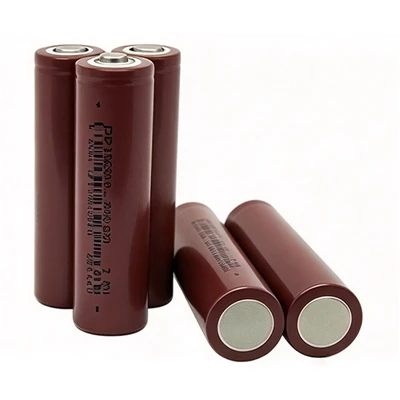
That day, I learned a lesson that’s stuck with me ever since: testing a cylindrical lithium battery’s capacity isn’t just a box to tick for suppliers—it’s the foundation of trust between us and our customers. For end users, it’s the only way to know their devices will run when they need them to. Cylindrical cells (think 18650, 21700, 26650) are the workhorses of everything from power tools and electric bikes to vaping devices and energy storage systems, but their capacity varies wildly depending on manufacturing inconsistencies, age, and how they’re handled before they reach a customer.
Today, after years of refining our testing process at our small, dedicated battery lab, I want to walk you through exactly how we test capacity— the same method we use for every batch we send out. This isn’t just theoretical lab stuff; it’s the real-world process we rely on to make sure our cells deliver what we promise.
First, let’s get one thing straight: capacity isn’t just a number stamped on the side of a cell. It’s the total amount of electric charge a battery can hold, measured in milliamp-hours (mAh) for smaller cylindrical cells or amp-hours (Ah) for larger ones. A 2500 mAh 18650, for example, should deliver 2500 milliamps of current for one hour before it dies, right? Not exactly— real-world conditions matter, and testing capacity has to follow strict protocols to be accurate.
The first step in our process is selecting a representative sample from the production batch. We never test every single cell—that would be a waste of perfectly good, usable product and take way too long. Instead, we follow a statistical sampling method: for every 1000 cells we produce, we test 20. For smaller batches (under 500 cells), we test at least 10. We pull cells from different points in the production line— not just the first or last ones off the line— because manufacturing conditions can shift slightly over a shift, and we want to catch those inconsistencies. We also make sure the sample isn’t damaged, scratched, or labeled incorrectly, since those defects can skew test results.
Once we have our sample, we prepare them for testing. Cylindrical lithium-ion batteries are sensitive to temperature, so we always keep our testing lab at a consistent 25 degrees Celsius (77 degrees Fahrenheit)— room temperature is the standard for industry testing. If the lab is too cold, the cell’s chemistry slows down, and it will deliver less capacity than it actually can. If it’s too hot, the extra heat speeds up chemical reactions, making the battery seem like it has more capacity than it does in real use. Temperature control is non-negotiable for accurate results.
Next, we fully charge the cells using a constant current/constant voltage (CC/CV) charger— the standard method for lithium-ion batteries. Here’s how that works: first, we send a steady current (usually 0.5C, meaning half the cell’s rated capacity in amps) to the cell until it reaches its maximum voltage (for most 18650s, that’s 4.2 volts). Then, we switch to a constant voltage, letting the current taper off until it drops to just 3% of the initial charging current. That ensures the cell is completely full— any uncharged lithium ions would lead to inaccurate capacity readings. We wait 30 minutes after charging to let the cell settle— no extra heat or voltage from the charging process skews the discharge test.
Now comes the most important step: the discharge test. This is where we measure exactly how much charge the cell can deliver. We use a programmable discharge tester that controls the current rate, voltage cutoff, and temperature. The key here is choosing the right discharge rate. Industry standard for testing nominal capacity is 0.5C, but we also test at 1C because many customers use cells at higher currents for power tools or e-bikes. For example, a 2500 mAh cell tested at 1C should deliver ~2500 mAh of charge, which is the real-world running rate most users will experience. We also test at lower rates (0.2C) to catch cells that only underperform at high loads— these are the ones that will die when you’re running a power saw or climbing a steep hill on an e-bike.
We run the discharge until the cell hits its cutoff voltage— usually 2.5 volts for cylindrical lithium cells. If we stop too early, we don’t get the full capacity; if we go lower than 2.5 volts, we risk damaging the cell’s internal chemistry, which will make its capacity permanently lower. During discharge, the tester logs every second’s data: voltage, current, temperature, and time. At the end of the test, we calculate capacity by multiplying the average current draw by the time it took to reach cutoff. For example, if a cell delivers 1.25 amps for two hours, its capacity is 2.5 Ah (2500 mAh), which matches its rating.
But we don’t stop at one test. We run two full discharge-charge cycles before we take a final capacity reading. The first cycle helps “form” the cell— it removes any excess lithium ions that might be stuck from manufacturing and stabilizes the cell’s chemistry. The second test is the real one. We also do a rest period between cycles— usually an hour— to let the cell recover.
Once we have the capacity data from our sample, we analyze it to make sure it meets our quality standards. We’ve set our bar higher than the industry minimum: for any batch, 95% of the cells in the batch must come within 5% of the advertised capacity. If our sample has more than 5% of cells falling below that, we reject the entire batch. That’s why we’ve never had a customer come back complaining about underperforming cells— we don’t ship anything that doesn’t meet our strict standards.
But wait— there’s more to capacity testing than just the lab. We also test for internal resistance, which is tied to capacity and performance. High internal resistance means the battery can’t deliver current efficiently, even if its capacity rating is correct. We use a milliohm meter to measure internal resistance at the terminals— any cell with resistance higher than 100 milliohms (for 18650 cells) gets rejected. High internal resistance is often a sign of damaged electrodes from bad manufacturing or rough handling during shipping, and it’s a common cause of unexpected capacity loss in the field.
We also do a pulse discharge test for high-current applications, like e-bikes or power tools. We send a short, high-current pulse (2C or 3C) to the cell and measure how much voltage drops, and how much capacity is delivered during that pulse. A good cell will only drop a little voltage and maintain capacity, while a bad cell will have a big voltage drop and lose capacity quickly under load. This is crucial for customers who use cells in high-drain devices— a cell that tests fine at 0.5C might not perform when you’re drilling a hole or accelerating an e-bike.
Over the years, we’ve also learned to account for real-world conditions that lab testing can’t fully replicate. For example, customers often ask about capacity in cold weather. We test a subset of our samples at 0 degrees Celsius (32 degrees Fahrenheit) to make sure the cells still deliver at least 70% of their rated capacity— that’s important for customers in places like Canada or the northern US, where winter temperatures can drop well below freezing. We also test cells after being charged and stored for three months to make sure they don’t lose too much capacity— self-discharge is another factor, and we aim for a self-discharge rate of less than 3% per month, which is better than the industry average.
We’re not perfect, of course. Last year, we had a small batch of 21700 cells that came back with slightly lower capacity than advertised, even though our lab tests passed. What happened? When we shipped them, we used standard cardboard packaging, and some of the cells were jostled too hard during transit. The vibration loosened a small number of electrode tabs inside the cells, which increased resistance and reduced capacity. Now, we use double-walled plastic packaging with foam inserts for all shipments, and we perform a quick re-test on every cell before it leaves the facility— just to make sure nothing shifted during shipping. That mistake cost us a few thousand dollars in returns, but it taught us that testing doesn’t end when the cell leaves the lab. It’s part of the entire process, from manufacturing to delivery to your doorstep.
For our customers— whether you’re a small e-bike builder, a solar storage company, or a DIY hobbyist— understanding how we test capacity should help you feel confident that the cells you get from us are reliable. But if you’re testing batteries on your own, here are a few tips to get accurate results: make sure you use a calibrated charger and discharge tester, keep the environment at room temperature, use the correct discharge rate for your application, and always run a full charge-discharge cycle. Don’t rely on just a quick voltage reading— a cell might have 3.7 volts (a full charge) but only be holding a fraction of its capacity.

At the end of the day, as a cylindrical lithium battery supplier, our job isn’t just to sell cells. It’s to make sure those cells work when our customers need them, every time. The capacity testing process I’ve walked you through is the backbone of that promise. If you’re in the market for reliable cylindrical lithium cells, whether for a new project or to replace old, underperforming ones, we’d love to talk. We don’t cut corners on testing, because we know your work depends on it.
Home Energy Storage Battery Pack Reference
- Linden, D., & Reddy, T. B. (2002). Handbook of Batteries (3rd ed.). McGraw-Hill.
- Zhang, S. S. (2006). The effect of temperature on performance of Li-ion batteries. Journal of Power Sources, 162(2), 1379-1394.
- USABC Electric Vehicle Battery Test Procedures Manual. (1996). United States Advanced Battery Consortium.
- Bluemle, J., & Sauer, D. U. (2010). Aging mechanisms of lithium-ion batteries and their impact on battery system design. Journal of Power Sources, 195(4), 1187-1194.
Shandong Dingshengyuan Electronic Technology Development Co., Ltd.
As one of the most professional cylindrical lithium battery manufacturers and suppliers in China, we’re featured by quality products and good service. Please rest assured to buy advanced cylindrical lithium battery made in China here from our factory. Contact us for more details.
Address: Building 3, Shanhaitian Intelligent Manufacturing Industrial Park, No. 1639 Beihai Road, Liangcheng Subdistrict, Shanhaitian Tourist Resort, Rizhao City, Shandong Province
E-mail: DSY18663388293@outlook.com
WebSite: https://www.dsybattery.com/
